

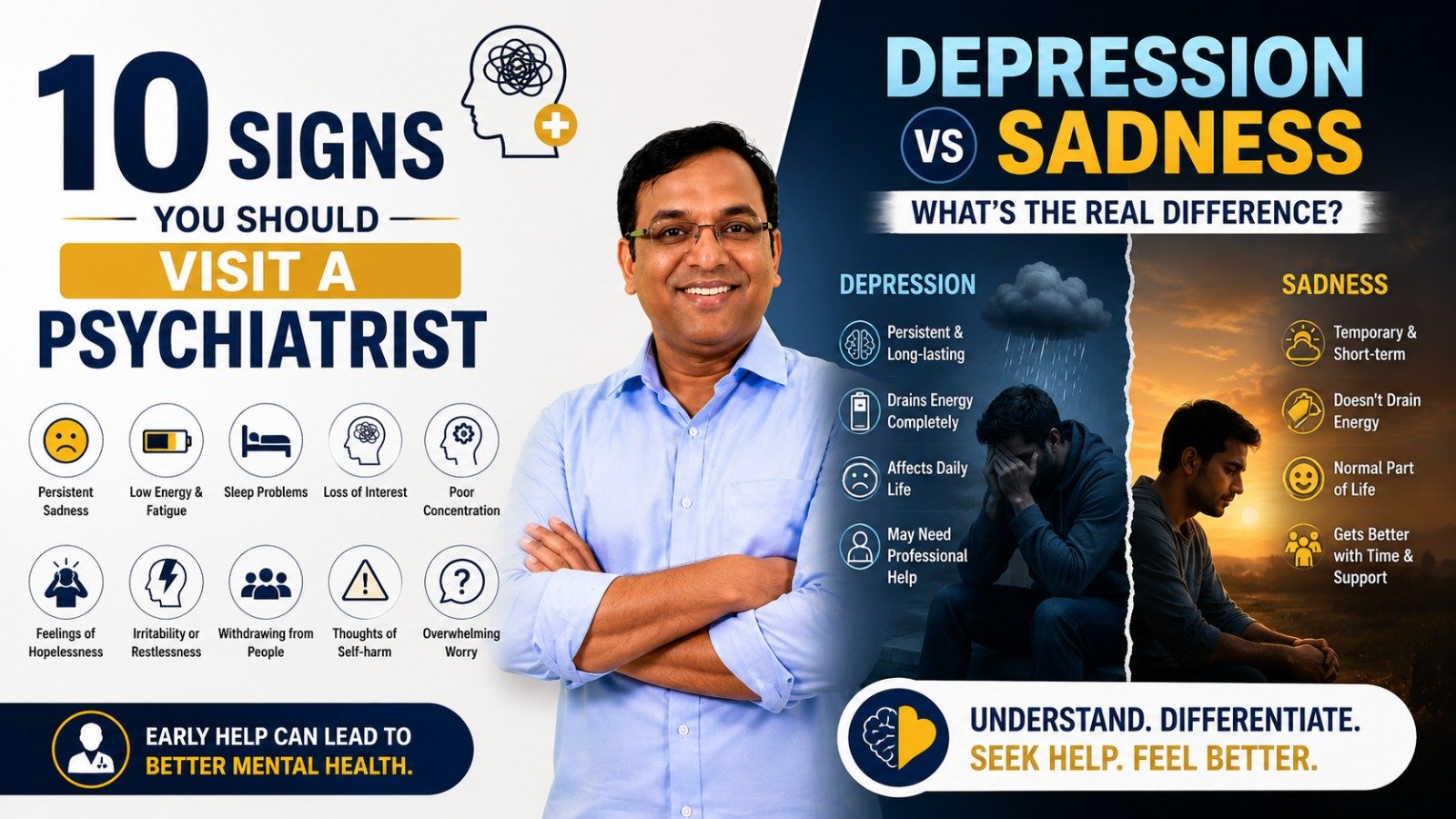
10 Signs You Should Visit a Psychiatrist
Sometimes life is emotionally draining. Actually if they get a good night’s sleep, a person may wake up exhausted, find it delicate to concentrate, avoid social situations or lose interest in formerly-enjoyed hobbies. These feelings may appear transitory at first, and numerous individuals believe that pressure or tension will go down on their own. Still, these passions can become major warning pointers for mental health if they persist for weeks and start to interfere with day- to- day functioning. Due to high work pressure, money problems, loneliness, and relationship difficulties, anxiety, despair, stress, and emotional collapse are getting more current in the moment’s world. As a result, knowing when to consult a psychiatrist is pivotal. Therefore psychiatric backing for mental health issues can enhance emotional wellness and bring life back into balance.
Here are 10 important signs that indicate you should consider visiting a psychiatrist.
1. Persistent Sadness
Everyone has moments of sadness. Everybody has difficult days, disagreements , work- related stress, or particular issues. And similar feelings generally go down over time. Still, if your depression persists for weeks and becomes your new normal, there may be a deeper issue.
Depression is constantly described by those who witness it as being emotionally exhausted in all aspects, not just physically. effects that formerly brought people joy simply no longer do. Indeed getting out of bed feels like climbing a mountain, and exchanging emotions is like work.
Pay close attention to symptoms including patient discontent, lack of energy, despair, emotional impassiveness and weeping for no obvious cause. Early detection and understanding of when to seek assistance greatly streamline rehabilitation.
2. Constant Anxiety and Overthinking
Stress makes sense when a delicate situation arises. Anxiety, on the other hand, manifests itself indeed in situations where everything appears to be in order and simply will not go down.
Your mind never stops. Something minor begins to feel like a huge concern. You worry about effects that might never happen, anticipate the worst- case scenario, and relive exchanges. And anxiety can manifest physically as important as mentally. A racing heart, uneasiness, tightness in the chest, breaking into a perspiration for no clear reason.
It’s not enough to “push through” panic attacks, patient solicitude, trouble unwinding, and a mind that just will not shut up.
The positive news? Depression and anxiety treatments are effective. People truly do feel more at ease, further tone- apprehensive, and more like themselves.
3. Severe Mood Swings and Emotional Outbursts
Everybody has times when they lose control or overreact. Still, it becomes perplexing and draining when it keeps passing, getting worried about little effects, crying out of the blue, and shifting between emotions.
The variety is that it’s generally not a personality disorder. Frequently, it’s the mind’s way of saying that it’s been carrying too much importance for too long.
connections, confidence and peace of mind are more negatively impacted by frequent perversity, emotional outbursts, unexpected anger and responses that feel lesser than the circumstances.
Early support doesn’t necessarily indicate a significant problem. It just indicates that you’re managing your internal health before it becomes more difficult.
4. Sleep Problems and Mental Exhaustion
Sleep and mental health are closely linked.
Warning signs:
- Insomnia (difficulty falling or staying asleep).
- Oversleeping.
- Nightmares or disrupted sleep patterns.
- Chronic sleep issues can both cause and worsen psychiatric conditions.
5. Losing Interest in Daily Activities
This one is difficult to spot as it moves slowly. Pastimes lose interest. You start to feel obligated to go see your pals. Things that used to make me happy, like a favorite meal or spending time with family, now feel like they don’t meet my needs or are very tiring. One of the most obvious indicators of emotional suffering, still it is among the more subtle. Lack of motivation, emotional distance, social isolation and the sense you’re just going through the motions are real indicators you could need help. Furthermore, many people only realize their problems have already reached an unmanageable level as it progresses slowly.
6. Difficulty Managing Stress
Unbearable and overwhelming stress might hurt mental and physical health. A psychiatrist may offer you medications to aid in resilience building and anxiety management.
7. Changes in Appetite or Weight
A decrease in appetite frequently serves as one of the initial physical indicators that a person is facing mental challenges. It’s more frequent than you might expect. Certain individuals completely lose their appetite; others seek solace in food, finding reassurance in eating rather than out of hunger. Unexpected weight changes, overeating or under-eating, emotional consumption of food and meal skipping can all result from stress, sadness and anxiety.
Don’t ignore these signs, as mental and physical well-being are tightly connected.
8. Difficulty Concentrating or Making Decisions
The mind becomes fatigued when emotional tension increases and it begins to manifest itself in the tiniest ways.
Once simple tasks now require twice as much work. You seem to forget things more frequently. In the middle of a conversation, attention wanders. Simple decisions begin to feel oddly challenging.
These symptoms of brain fog, inability to focus, forgetfulness, mental exhaustion and persistent confusion are more than just off days. They are indicators that emotional health could require some care. And once that is resolved, mental clarity frequently returns as well.
9. Social Isolation and Withdrawal
One of the most common and detrimental responses when someone is experiencing emotional pain is to withdraw from other people.
Calls are not picked up. Invites were turned down. Indeed those closest to you begin to feel like too important work to be around.
It’s reasonable to need time alone. Still, it becomes a warning index when one habitually avoids people, fears social situations, feels emotionally distant, and withdraws for weeks.
The unpleasant thing is that loneliness frequently exacerbates the underlying emotions. Reconnecting gets more delicate the longer it goes on. Rebuilding those connections and that confidence can be truly backed by professional backing.
10. Hopelessness or Thoughts of Self-Harm
This is a medical emergency that needs to be attended to right away.
Signs consist of:
- Speaking of death or despair
- Distancing oneself from loving ones
- Giving up belongings
- Communicating a sense of burdensomeness
Urgent psychiatric assistance is essential if you or someone you know has these thoughts.
When to See a Psychiatrist
Many people wonder whether their emotional issues are serious enough to demand medical attention. In reality, mental health disorders should not be ignored just because they seem to be under control.
You might want to get a mental health consultation if your emotional issues last more than two weeks, negatively impact your relationships or job, disturb your sleep or impair your normal level of functioning.
Understanding when to get mental health treatment will help stop emotional issues from worsening and aid recovery.
Book your psychiatrist appointment today!
Final Thoughts
Many people have problems with their mental health, therefore getting expert help might greatly help to improve your situation. If you or someone you know shows many of these symptoms, talking to a psychiatrist can give vital awareness, support and treatment.
Going to the doctor for physical issues is just as important as tending to our mental and emotional health.
Early intervention helps to raise life happiness, better mental health, and strengthen relationships.
Frequently Asked Questions(FAQs)
How do you know when it’s time to see a psychiatrist?
These are some common signs that would suggest a consultation with a psychiatrist: For weeks or months-persistent melancholy or emotional pain-feeling down, disheartened or overwhelmed Having difficulty fulfilling everyday responsibilities: fighting with regular duties at home, school or business.
What are 5 early warning signs of mental illness?
- Social withdrawal is the unusual isolation of oneself, friend avoidance or lack of interest in previously enjoyed interests and activities.
- One can experience rapid, significant changes in feelings including extreme rage, persistent depression, or great highs and lows-all of which are mood swings.
- Significant lack of sleep, too much sleeping, or sudden changes in food and weight could be symptoms of a problem with sleep or appetite.
- Unexplained drop in output at work, school or daily household responsibilities.
- Not sure thinking problems with memory, attention, or logical thought and communication.
What are the 7 main mental disorders?
- Mood Disorders
- Anxiety disorders
- Psychopathic Disorders
- Personality disorders.
- Eating Disorders
- Trauma and stress-related disorders
- Neurodevelopmental Disorders
What are 5 psychiatric symptoms?
- Depressed Mood constant sadness, emptiness, hopelessness, or indifference in hitherto favorite pastimes.
- Too much worry is strong, ongoing worry, fear or discomfort that is out of line with the situation and disrupts daily life.
- False sensory impressions like hearing noises, seeing things or feeling things that don’t exist are hallucinations.
- Delusions are firmly held, irrational beliefs that run against obvious facts (such as paranoia) and are not based in reality.
- A sudden or slow need to isolate oneself from friends, family and daily life is social withdrawal.
What is the first stage of a mental breakdown?
A mental (or anxious) breakdown usually starts with early warning signs and increasing stress. People at this phase are under prolonged acute or chronic stress. The symptoms are readily missed since they sometimes mimic normal, stressful daily pressure.