

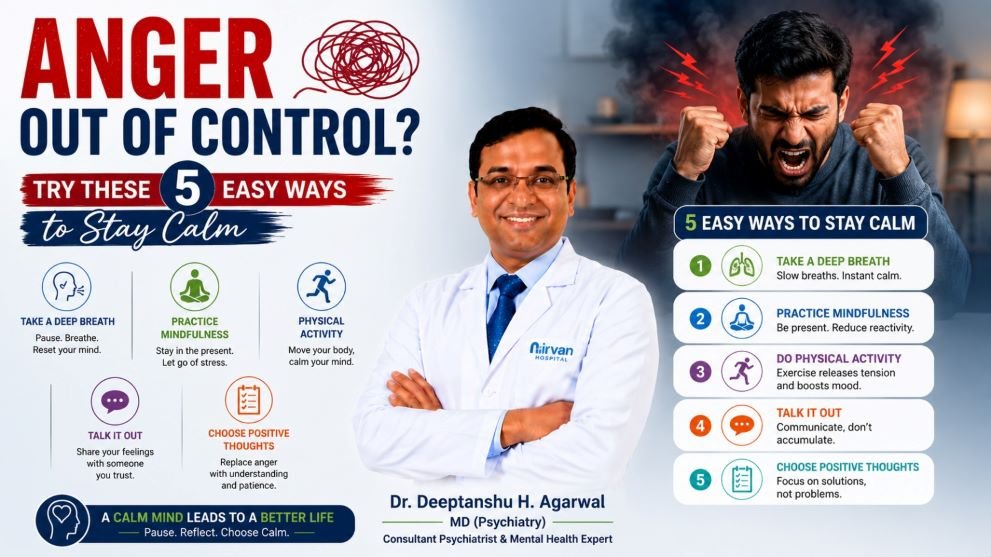
Anger Out of Control? Try These 5 Easy Ways to Stay Calm
Everyone feels upset. This is a typical human emotion that helps us deal with setbacks, unfair situations and threats. But when anger becomes powerful, regular or hard to regulate, it starts to damage relationships, jobs, physical health and general quality of life.
Though this is not true, many people view anger as just their character trait. Appropriate strategies and help can help one control healthy anger.
It’s time to learn better ways to control your feelings if you often yell, respond aggressively, regret your words later, or feel bad following a fight. This article will teach you five simple and useful techniques to keep quiet, grasp why anger can be challenging to manage, and realize when you need expert assistance. Professionals in mental health help individuals control their anger using data-driven techniques like psychotherapy and tailored treatment programs.
5 Easy Ways to Remain Calm When Anger Takes Over
1. Pause Before Reacting
Anger might trigger unintended responses. According to neuroscience research, while we are experiencing intense emotion, our amygdala becomes overactive, which momentarily impairs our capacity for reason. When enthusiastic:
- About ten to twenty seconds of rest time.
- Steer clear of speaking too early.
- If needed, distance yourself from the circumstances.
This little delay enables the analytical side of the brain to recover control. Many conflicts grow since people respond quickly instead of deliberately. The pause approach is especially useful among the anger control techniques you can start right now since it stops emotional harm before it happens. Rest doesn’t imply staying away from difficulties. It just helps your brain to more constructively process emotions.
2. Use Physical Movement to Release Tension
Anger causes physical energy inside the body. Physical activity lets you properly discharge this energy. Studies reveal that physical activity lowers stress hormones like cortisol and raises mood-boosting compounds like endorphins.
Easy choices abound:
- Brisk stroll
- Extend
- Go jogging
- Dance
- Safely hit the pillow
- Let me leap
Only ten minutes of walking can greatly improve your mood. Those who struggle to regulate their rage often find that physical activity helps them down and restores their emotions into balance. Over time, regular exercise helps you to sleep better and helps to lower your irritability.
3. Identify Your Anger Triggers
The rage can occasionally have nothing to do with the present situation. Fear, rejection, disappointment, stress and grief could be lurking just below the surface. Consider:
What on earth irritated me?
- Am I depressed, ashamed, or injured? This scenario brings back a time.
- Emotional control depends in part on self-awareness. Psychologists say that realizing repressed feelings helps to lessen their power.
- Knowing your anger triggers will enable you to better control your future anger by means of this. Maintaining an anger diary can also enable you to spot patterns that repeat.
- Many people think that unmanaged stress, tiredness, and unfulfilled emotional requirements are the major sources of irritation.
4. Change Negative Thought Patterns
Often, irrational ideas like: will exacerbate anger.
- This is always happening to me.
- Nobody honors me.
- All has been lost.
Studies on cognitive behavioral therapy (CBT) suggest that attitudes greatly affect emotions. Reviewing your bad ideas can help you to control your rage much. Rather than pondering. I detest that Consider:
Though annoying, I can take care of this calmly.
Exaggerated thinking patterns should be challenged since doing so will soon help one to learn how to manage their rage. Careful thought gives one emotional control and lessens automatic reactions.
5. Take Care of Your Mental and Physical Health
Mindfulness helps you to notice your feelings without acting instinctively. Studies indicate that routinely practicing mindfulness helps to lower aggressiveness and boost emotional regulation. Easy mindful activities consist of:
- Pay attention on your breathing.
- Watch ideas without judgment.
- Keep an eye on physical feelings.
- Focus intently on the noises all about you.
- Five minutes of mindfulness can even help soothe your fury.
Meditation trains your brain to regulate emotional responses, over time. To foster self-regulation and emotional awareness, many psychologists recommend mindfulness as a component of anger management therapy.
Mindfulness also makes it possible for people to reply, rather than react under pressure in difficult situations. Do you get furious at work? Take control of your rage on the job.
Signs That Your Anger Needs Attention
Everyone occasionally finds themselves upset. Still, anger control could help you if:
- Start and yell quite a lot
- Anger causes me to break objects
- Start acting physically violently
- Then your reaction would be sorry
- Most of the times I find myself upset
- Hard to relax
- Having personal conflict because of anger
Do you believe your rage is influencing your home life or career?
Early awareness of these indications is the start toward good transformation.
When Should You Seek Professional Help?
Although minor irritation is common, expert advice might be helpful if:
Every now and then everybody becomes upset. You might find, though, that anger management helps you if:
- Screaming a lot on
- When I’m mad, I ruin stuff
- Get physically aggressive
- Then you will rue your response
- Mostly I am upset
- Hard to unwind
- Going through interpersonal conflict since of anger
Is your rage influencing your domestic or professional life? Good change begins with early recognition of these signs.
Sessions and your return home to work on your life will help to answer a lot of your wrath. Though the main goal of your therapy is to help you control your rage, you also need to address any underlying problems that could be influencing you. A qualified psychiatrist can suggest a course of therapy, which could involve medicine, therapy or counselling and help you to determine if your anger is caused by an underlying mental illness. Individualized treatment for anxiety, depression, stress-related problems and anger management may be part of extensive mental health services.
Final Thoughts
Everyone of us feels rage. We should pay attention to it as it starts to influence our ideas and our relationships. The bright side is that if we approach it that way, we can handle rage. Little things like breath, knowing what makes us furious, speaking in a low voice, waiting a little before we say something, and self-care can have a major impact over time on how we feel.
When we are calm we can say what we feel in a way instead of keeping it inside. If we get angry a lot or if it is really bad or if it is messing up our life or our job we should get help from someone who knows what they are doing. This is the step to make our minds healthier. With the help we can be closer to the people we care about and find better ways to deal with things and feel better overall.
Frequently Asked Questions
Why does rage become so intense that it is difficult to control?
Anger gets out of control when we are stressed all the time or when we are anxious or depressed. Sometimes it happens because we do not sleep well or because we have problems with the people we care about or because of too much work. Bad things that happened to us in the past can also make us angry. We just don’t always know how to handle our emotions. If we want to be able to control our anger, we have to know what make us angry.
What are 5 ways to control anger?
- Practice the STOP Technique
- Take a Physical Timeout
- Use the 90-Second Rule
- Reframe Your Thoughts
- Release Tension Safely
Can you get help with anger?
Yes, treatment is available if you want to bring your anger under control. It makes you aware of the causes of your anger, what you can do, how to communicate and how to handle your feelings when things are getting hot.
Counseling can certainly help you learn to control your anger. Recognize your triggers understanding what triggers can help you find ways to relax, better communicate with others and manage your feelings when you are under stress. I think it’s just we don’t know what to do with our emotions. If we are going to be able to control our anger we have to know the cause of our anger.
What can I do to cool off when I’m so angry?
Anger is caused by that accumulated tension, anxiety and depression and there is inevitably going to be a release. Perhaps we are not sleeping enough. Perhaps we are under stress at work, or are having problems with the people we love. Events from our past, too, can ignite anger. Sometimes we just don’t know how to deal with our emotions. To adults: “We have to know what it is that we’re mad at so we can do something about being mad.”