

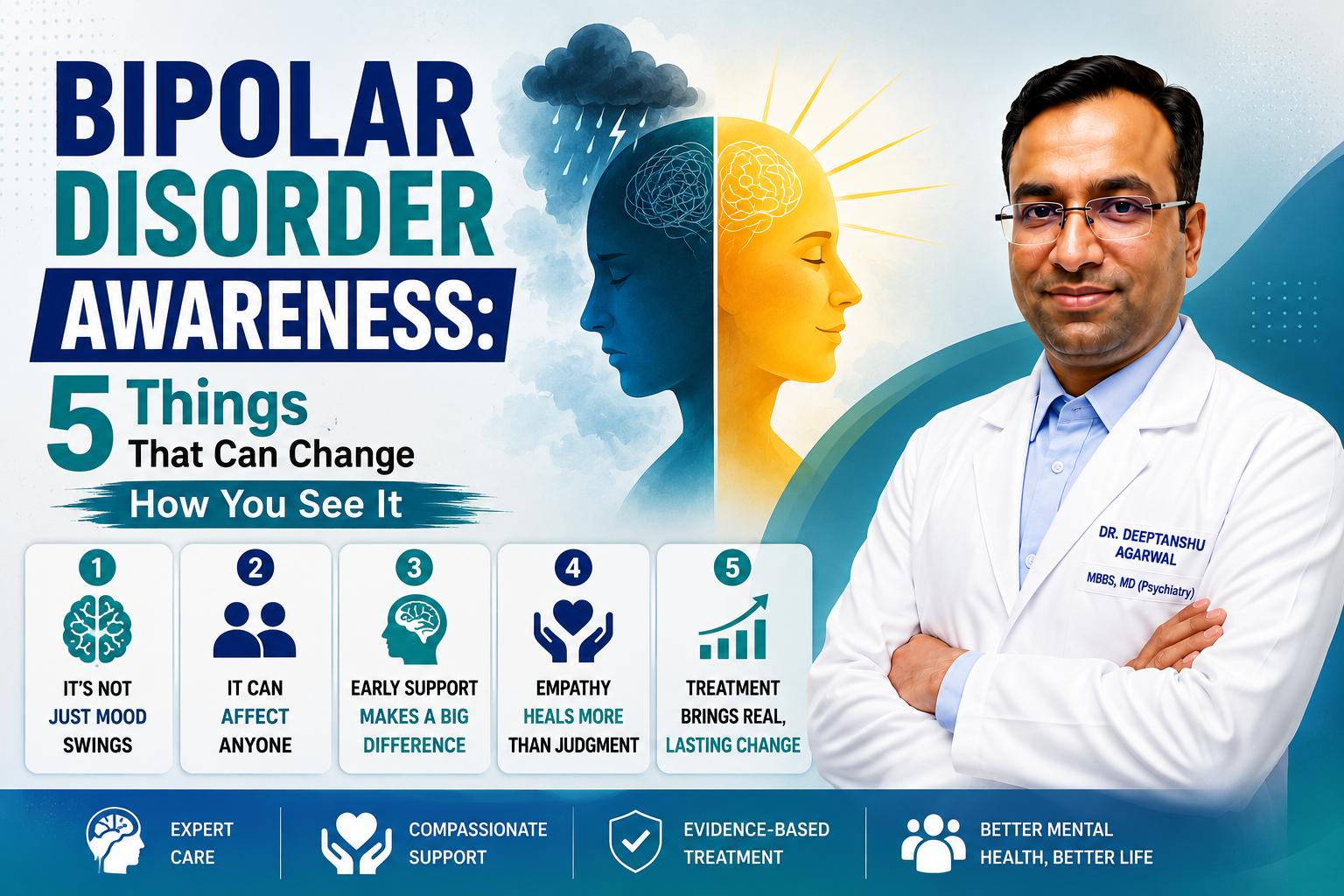
Bipolar Disorder Awareness: 5 Things That Can Change How You See It
One encounters a person within a week who seems full of energy – speaking rapidly, sleeping for hardly any time, and engaging in multiple projects. After some weeks, the same individual struggles to wake up in the morning, stays away from company, and finds no pleasure in the things they used to enjoy.
People tend to assume that these changes are simply mood swings. However, the fact of the matter is that something much more serious is happening.
That’s precisely why Bipolar Disorder Awareness is so important. Many, though, acquire a stigma from their lack of knowledge of this disease. Though not diagnosed and unaware of this condition, millions of people all throughout are afflicted with it.
Luckily, awareness can change everything.
Understanding the truth helps us to replace false beliefs with knowledge, inspire early care, and help people suffering from this condition.
This post will help you to learn five significant facts about bipolar illness that could significantly alter your perspective of it.
What Is Bipolar Disorder
Bipolar disorder is a mental health condition that affects one’s mood, energy levels, activity, and capacity to carry out daily chores in uncommon ways.
These adjustments are much more severe than typical emotional swings.
People who have bipolar disorder go through:
- Mania
- Hypomania
- Depression
These episodes might go days, weeks, or even months without correct care.
5 Things That Can Change How You See Bipolar Disorder
1. Bipolar is not merely mood swings
Though everyone experiences mood swings now and again, bipolar is a mood disorder not only a matter of having them. For instance, you could grow very upset over small events and lash at your loved ones during a mood swing. While under a manic episode someone with bipolar can lose touch with reality and lose control of their ideas and activities.
People with bipolar disorder have rather severe mood, energy, activity, and sleep changes that deviate from their normal habits. Being “manic” is more than simply being boisterous, vivacious, and happy. A person going through mania could feel very good, have a lot of energy, and be able to go without sleep for a long time. Although this sounds fine, mania can also be a rather unpleasant and painful condition defined by feeling out of control.
2. Bipolar is a persistent disorder
Like diabetes or heart disease, bipolar disorder is a condition that calls for continuous care. Like heart disease and diabetes, however, it is readily treatable. Bipolar is a manageable condition; thus, getting a diagnosis of bipolar does not mean your life has to be dominated by a mental disease. If the sufferer acts actively in control of the condition, bipolar disorder has a rather high recovery rate.
3. It’s not all that rare
According to the NHS national survey in 2016, 2% of the British people suffer bipolar illness. That is thousands of people.
4. You can still live a normal life
Simply because someone has bipolar disorder, they are not all over the place or unable to keep a job and lead a normal life. Many bipolar disorder sufferers live quite busy lives, have demanding employment, and have successful businesses. They consist of lawyers, doctors, teachers, researchers, and engineers, among others.
Examples of celebrities who belong to them include Stephen Fry, Russell Brand, Mariah Carey, Demi Lovato, and Catherine Zeta-Jones. They control their lives and their symptoms using a mix of medication, talk therapy, and the lifestyle choices that best fit them, that is, stress avoidance, a routine, and healthy sleeping patterns.
5. No one is disordered
People usually say, “So-and-so is bipolar” instead of “So-and-so has bipolar” or has been diagnosed with bipolar disorder. Words count a lot; different. Because many times a person with bipolar is only upset about something, “being” bipolar is too limiting and defining. People with bipolar disorder have emotions and moods like everyone else; most of the time the moods they go through have no ties to the disease.
Most of the people around them, though, think they are “being bipolar” or going through an episode when they are emotional. Remember always that it is not always true.
Typical Indicators of Bipolar Disorder
The kind of episode determines the symptoms.
Symptoms of Mania
- High energy
- Less sleep
- Overconfidence
- Quick speech
- Quick thoughts
- Rising activity
- Risk-taking activity
Symptoms of Depression
- Continued depression
- Tiredness
- Guilt-related emotions
- Lack of inspiration
- Inadequate attention
- Changes in appetite
- In some cases, suicidal or
- Self-harm thoughts
Anyone struggling with suicidal ideation should call local crisis support or get urgent medical attention.
Why Choose Dr. Deeptanshu Agarwal for Bipolar Disorder Management?
Choosing the right professional for proper management of bipolar disorder is one of the steps that should be done at the very beginning. Applying an approach based on diagnosing the patient and an individual approach to treatment and emotional well-being, Dr. Deeptanshu Agarwal offers caring and scientific psychiatry.
Each approach chosen for therapy is always done specifically considering the client’s individual features and needs and, therefore, provides an individualized method of assistance which cannot be stereotyped. Clients will receive the needed support to handle their moods and lead a normal life due to confidentiality, empathy, and follow-up. Being in need of help yourself or your relatives, you can be sure that Dr. Deeptanshu Agarwal will help you with it professionally and effectively.
Final Thoughts
Knowing about the diagnosis is only one part of understanding bipolar disorder. The other part is realizing that the condition is treatable and does not represent a personal flaw. By dispelling misconceptions, we can facilitate early detection, reduce the associated stigma, and create a more supportive environment for those affected.
Those who need help can actually get help, and live fulfilling lives once misconceptions are debunked. It is the first step towards compassion and positive action, whether it be in helping a loved one or oneself suffering from bipolar disorder.
Frequently Asked Questions (FAQs)
Can you recover from bipolar disorder?
While there is no cure for bipolar disorder, the condition is highly treatable. Many people achieve long-term remission, successfully stabilizing their moods and regaining their ability to function, work, and enjoy a high quality of life through consistent medical management and lifestyle adjustments.
Because it is a lifelong condition, “recovery” generally means managing symptoms effectively rather than the illness disappearing completely.
What is schizoaffective disorder bipolar type F25 0?
ICD-10 code F25.0 designates Schizoaffective Disorder, Bipolar Type. It is a serious mental health condition characterized by a chronic mix of primary psychotic symptoms (like hallucinations and delusions) and severe mood fluctuations (mania and depression).
Is there a treatment for bipolar disorder?
Although there is no known cure for this condition, the symptoms can be managed with medications, therapies, and healthy lifestyle choices.
What is the cause of bipolar disorder?
Bipolar disorder is thought to be caused by a combination of environmental factors like stress, chemical imbalances in the brain, and genetic susceptibility.


Bipolar Disorder Explained: 5 Important Insights You Can’t Ignore
September 26, 2026 - 6:58 am[…] person with bipolar disorder may experience periods of unusually elevated or irritable mood, increased energy and reduced need […]