

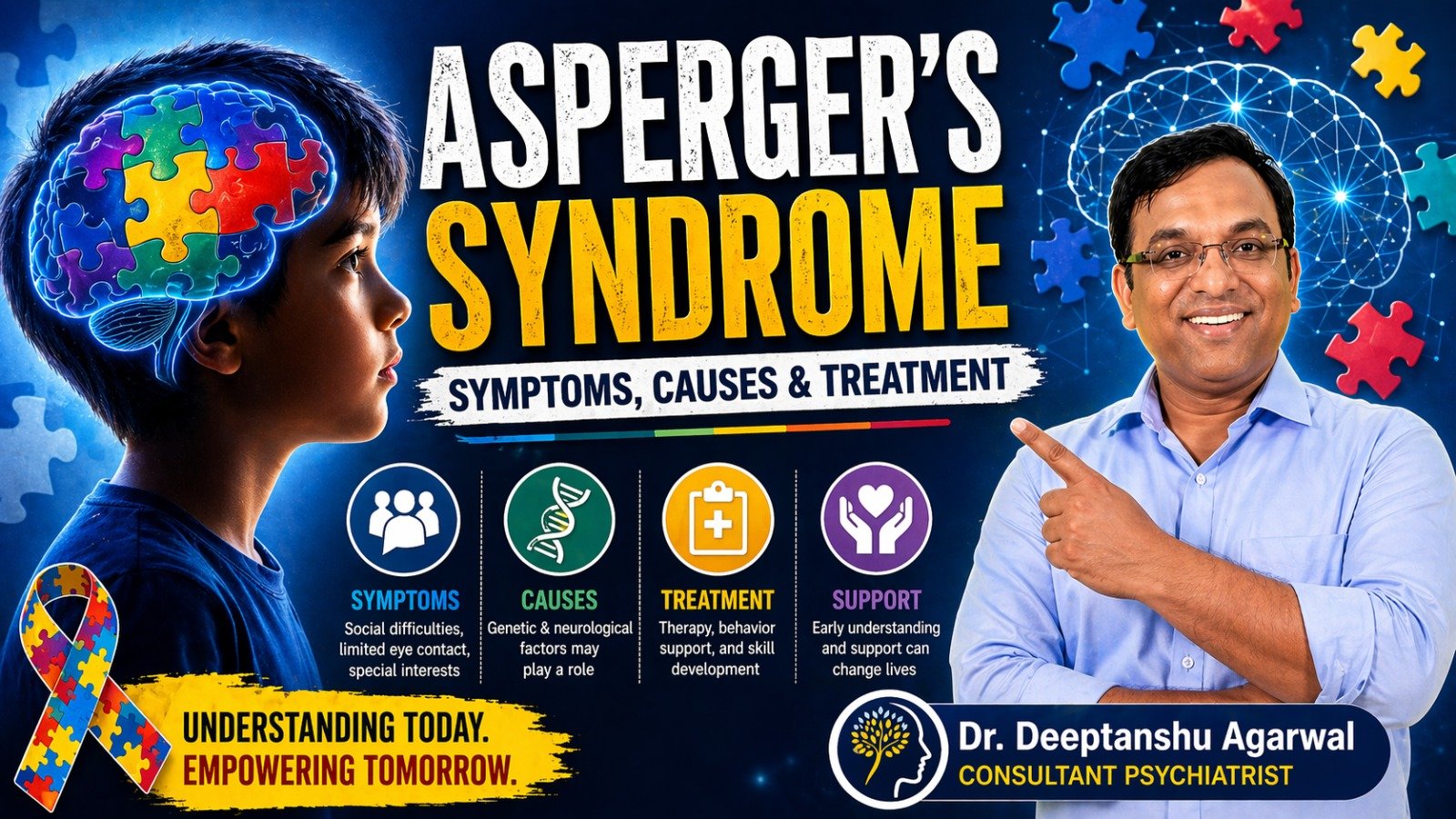
Asperger's Syndrome: Symptoms, Causes, and Treatment
Asperger’s syndrome is a term that healthcare providers no longer use. Prior to 2013, it described a brain difference that affects social relations and certain actions. At the moment, people with the features of Asperger’s admit an opinion of autism spectrum disorder (ASD). But Asperger’s is still part of numerous people’s individualities.
What is Asperger’s syndrome?
Asperger’s syndrome was a diagnosis healthcare providers used before 2013. It described what providers viewed as a different type of autism. Now, both Asperger’s and autism fall under the broader umbrella of autism spectrum disorder (ASD).
Asperger’s is not a medical diagnosis anymore. Most people with a previous diagnosis of Asperger’s have what providers today call “level-one autism”. This means they need a low level of support in their daily lives. But everyone’s different and some people diagnosed with Asperger’s may need more support than others.
Asperger’s might be a strong part of your identity if you were diagnosed before the medical language changed. For illustration, you might suppose of yourself as having Asperger’s rather than ASD. You might use the term “aspie” to describe your identity. That’s incompletely why the language changed. The autism diapason includes a range of features and capacities. An ASD opinion is flexible enough to allow everyone on the diapason to get the support that’s right for them.
What Are the Symptoms of Asperger’s Syndrome?
Even though every child with Asperger’s pattern is unique, their obsessive interests and social difficulties are what distinguish them. Children who have Asperger’s pattern may have limited facial expressions, strange speaking patterns and poor social connections. They might have unique erraticisms, compulsive routines or interests and perceptivity to sensitive stimulants.
For a child with Asperger’s Syndrome, you may see one or more of the following patterns of behavior:
- Difficulty with social relations and social language
- Not understanding feelings well or having a lower facial expression than others.
- Not using or understanding verbal communication, such as gestures, body language and facial expression.
- Conversations that revolve around themselves or a certain topic
- Speech that sounds unusual, such as flat, high-pitched, quiet, loud or choppy
- An intense obsession with one or two specific, narrow subjects
- Unique mannerisms, repetitive behaviors or repeated routines
- Becoming upset at slight changes in routines
- Memorizing preferred information and facts easily
- Clumsy, awkward movements, including difficulty with handwriting
- Difficulty managing feelings, occasionally leading to verbal or behavioral outbursts, Voice – Harmful actions or explosions.
- Not understanding other people’s passions or perspectives.
- Hypersensitivity to lights, sounds and textures
Children with Asperger’s Syndrome often show no delays in their overall language development (e.g., grammar skills and vocabulary), but can have trouble using language in a social context. They may have average intelligence, but can have problems with attention span and organization.
Causes of Asperger Syndrome
The exact cause of Asperger Syndrome is not clear. However, it is believed to result from environmental and genetic components. Some key elements are mentioned below:
Genetics
There is evidence to recommend a genetic element to Asperger’s. Families with one member on the autism spectrum might have a boosted risk of having another family member with equivalent traits.
Brain Development
Brain development and connectivity abnormalities, especially in social communication and interaction. It might contribute to Asperger’s Syndrome.
Prenatal Factors
Some in-depth exploration has explored the impact of Prenatal Essentials, such as maternal exposure to particular infections or poisons during gestation, on the growth of autism spectrum diseases.
Environmental Factors
Pre-mature child exposures and experiences might also play an imperative role. For instance, exposure to high levels of tension or trauma during early growth and development could affect the expression of Asperger’s characteristics.
How Asperger Syndrome Presents in Children and Adults
In children, Asperger’s syndrome symptoms may be noticed when they:
- Have difficulty making friends
- Struggle to share interests
- Fail to understand social cues and rules
- Engage in repetitive behaviours
- Have intense interests in specific topics
- Exhibit a strong preference for routine
Speech development is generally typical, but social language use may be limited. Children with Asperger’s frequently have a sophisticated vocabulary but may speak in a formal, monotone or pedantic manner. They may also interpret language literally and have trouble with affront, humor or numbers in speech.
In adults, Asperger’s syndrome can present challenges in work, relationships and daily life. They may:
- Struggle with social interactions and making friends
- Have difficulty with teamwork or collaboration
- Prefer solitary activities and interests
- Be highly focused on specific topics or hobbies
- Have trouble with organization and planning
- Experience sensory sensitivities
Numerous grown-ups with Asperger’s still enjoy successful, independent lives. They might do well in professions that play to their strengths, similar logical thinking, in- depth subject- matter moxie and attention to detail. Individuals with Asperger’s pattern can flourish with the right kind of care and acknowledgment.
How is Asperger Syndrome Treated or Managed?
Treatment for Asperger’s Syndrome focuses on managing symptoms, developing chops and providing support. There’s no single treatment protocol, as each patient’s requirements are unique. Common interventions include.
- Social Chops training to ameliorate communication and commerce
- Cognitive behavioural therapy to address anxiety and rigid thinking patterns
- Occupational therapy for sensitive issues and daily living skills
- Speech remedy to develop socially realistic language
- A drug to manage co-occurring conditions like anxiety or ADHD
Support for education is also essential. Personalized education plans (IEPs) that provide accommodation and variations in the classroom are salutary for numerous children with Asperger’s.
Support for life skills, employment coaching and vocational training might be salutary for grown-ups. Support groups and remedies can also give inestimable tools for managing connections and day- to- day difficulties.
Asperger’s pattern treatment is most effective when it’s provided by a cooperative, multidisciplinary team and the cases are shaped to it. By uniting with therapists, preceptors and medical experts, it’s feasible to ensure that applicable interventions and support are in place.
How is Asperger Syndrome Diagnosed?
Asperger’s Syndrome is no longer a formal opinion in the DSM- 5 or ICD- 11. Rather, individuals with these characteristics are now diagnosed with autism spectrum disorder, generally at a position for those with milder symptoms.
Diagnosis involves a comprehensive evaluation by a multidisciplinary team, including:
- Assessment of social communication skills
- Evaluation of behaviour and development
- Use of standardised diagnostic tools like the ADOS
- Gathering information from parents and teachers
There are no blood tests or brain reviews for diagnosis – clinicians rely on behavioural compliance and experimental history. Beforehand opinion is salutary, as it allows for timely intervention and support.
It’s beneficial to have an opinion beforehand since it enables prompt support and intervention.
However, if you suppose your child might exhibit symptoms of Asperger’s, bandy a referral for an autism evaluation with your pediatrician. Understanding each person’s distinct profile is the thing of the comprehensive and customized individual process.
Final Thoughts
Even though Asperger’s is a long- term condition, it has no bearing on a person’s future. With early discovery, accurate opinion and effective treatment, people can have satisfying lives. Knowing the symptoms, causes and curatives can help families, preceptors and communities give lesser support. Empathy and mindfulness are the foundation for addition and acceptance.
Frequently Asked Questions (FAQs)
What is the treatment for Asperger’s?
Treatment of Asperger’s Syndrome usually includes: Social skills training. Adaptive skills support. Emotional regulation/Behavior support.
What is the best medication for Asperger’s?
There are no medicines approved by the FDA to specifically treat Asperger’s or autism spectrum disorder. But some specifics can help with related symptoms similar to depression and anxiety. Your doctor may define some of these picky serotonin reuptake inhibitors (SSRIs).
Can you live a normal life with Asperger’s?
Asperger syndrome is not a curable condition. Still, being one of the milder forms of the Autism Spectrum Disorders, with little language development difficulties and normal or high Command, this condition allows a child to live a normal or near normal life.
What is the cause of Asperger’s syndrome?
No one thing causes Asperger syndrome. Still, exploration suggests that Asperger’s is inheritable. Other factors, like being born to aged parents and chromosomal abnormalities, can contribute to Asperger’s. Vaccines don’t cause Asperger’s and give numerous particular and collaborative health benefits.
Type your paragraph here