

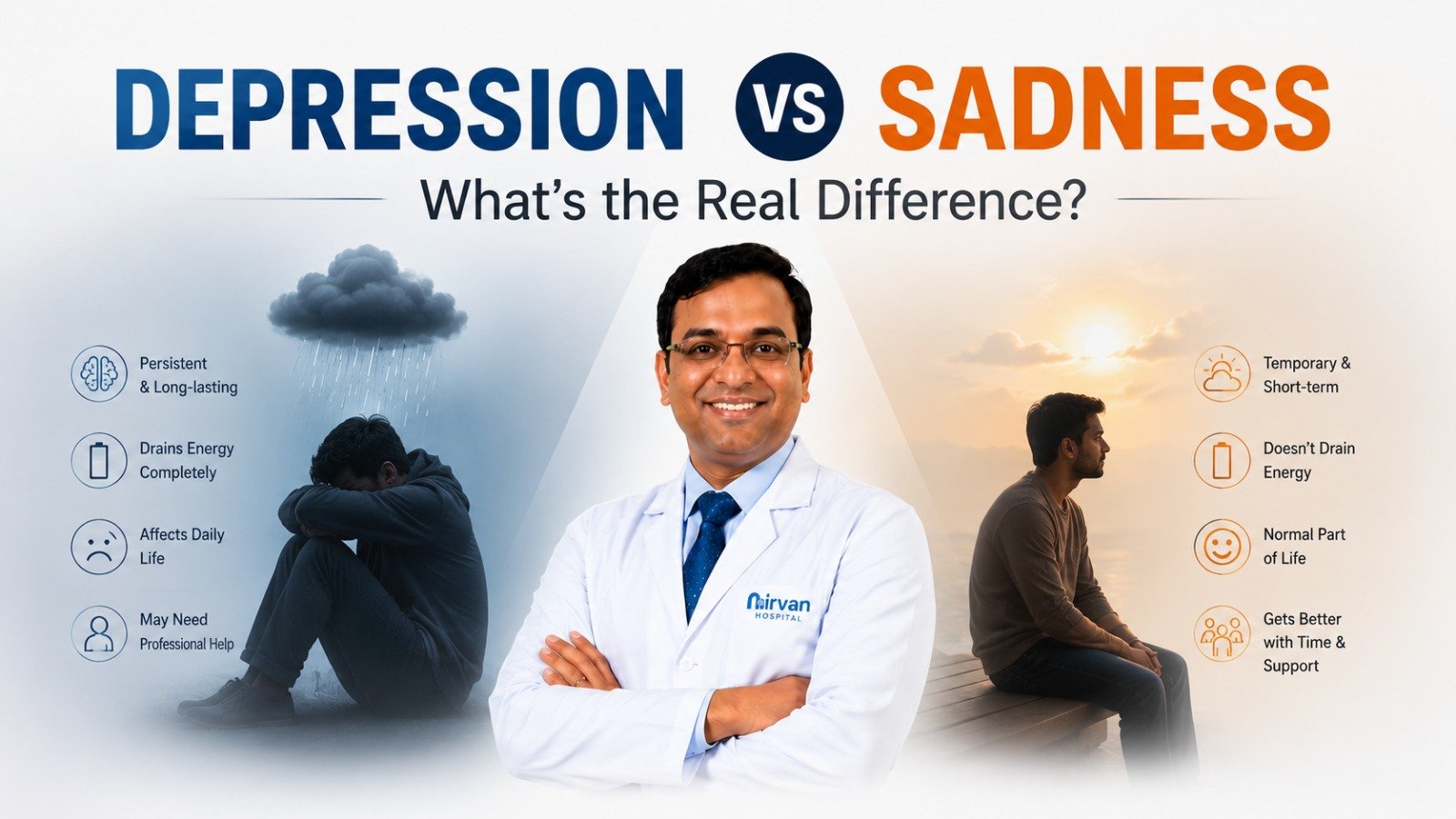
Depression vs Sadness – What’s the Real Difference?
Most mornings, awakening presents a difficulty for you. Just thinking about getting ready drains energy. Is spending time with friends and family becoming less enjoyable? Are you eating noticeably more or far less than you usually do?
Many people think that having depression simply means feeling sadness. But you don’t have to be teary to be depressed. All of the behaviors mentioned above and a myriad of others that affect how you think, feel, behave, and express yourself can be signs of depression.
This article explains everything in detail, including Depression symptoms vs sadness, emotional warning signs, causes, treatment options, and When sadness becomes depression.
What is sadness?
Everyone has depressing periods. Though it is a normal human emotion brought on by difficult or unfamiliar situations in life, it does not point to despair.
Depressed people frequently distance themselves from loved ones, cry, and weep. Usually, melancholy disappears as circumstances change and time goes on.
While sadness is not a good feeling, research shows that it is not necessarily a bad thing. In fact it motivates you to engage in behaviours to feel better; studies show that if managed well, sadness can also make you more resilient in the face of distress. Sadness is a great motivational tool that makes you want to improve things in your life. More significantly, sadness is absolutely natural and sometimes essential. Sadness enables you to feel happiness more intensely and appreciate it fully. It provides you with the perspective that is necessary to be grateful for happiness when you do have it. And, of course, like any other feeling, sadness too passes with time.
What is depression?
Everything in our life is less enjoyable, less interesting and less important. The things we once loved and were passionate about no longer bring us meaning or purpose. Depression, unlike sadness, does not have a specific underlying trigger. Individuals are often depressed “for no specific reason.” On the surface, they may seem like they have their life together. A great job, a loving family, a beautiful home, but in reality, they are hiding their emotions behind a mask. They may be barely able to get out of bed in the morning. They may be struggling with their relationships. They may be lonely. They may no longer find satisfaction or purpose in their job. Depression makes us less patient and quick to anger. Unfortunately, many individuals assume that one can snap out of their depression. They misinterpret that depression is not a choice or a state of mind. Depression is a mental illness.
Consult an expert now to learn about your mental health!
Treating sadness versus treating depression
Sadness can be overcome within time. You can express your emotions, “cry it out”, go out with friends or spend time outdoors. Expressing sadness over the loss of a loved one may take some time, but you can still find happiness in other aspects of your life. Engage yourself more with these happy aspects.
Combining drugs and psychotherapy works best for depression. Selective serotonin reuptake inhibitors (SSRIs) are the most often used antidepressants. Every drug has side effects; SSRIs are no different; thus, before beginning this treatment, you must discuss with your doctor. The main psychotherapy strategy for treating depression is cognitive behavioral therapy. Depression treatment is a process that takes some time and several approaches; it is not instantaneous. Many therapies help most people since depression is a common mental illness.
Which Types of Psychotherapy Work Best?
Psychotherapy always entails conversing with a qualified expert aiming to assist you in changing your ideas and actions to reduce your symptoms. But some studies indicate that some varieties might be more helpful for depression than others. Among these are:
- Psychological Behavioral Therapy Many times referred to just as CBT, this is a methodical approach meant to find and change unfavorable ways of thinking.
- Interpersonal Therapy Improving your interactions with people helps this method to center on raising happiness.
- Psychodynamic Treatment By means of awareness on how past events influence your present conduct, this strategy seeks to help you to lessen their bad influence.
When to get expert assistance
It might be difficult to recognize when depression becomes something that requires professional assistance. You may question whether your feelings are bad enough to be worth discussing with someone. In actuality, you don’t have to experience a crisis before making contact.
There are certain indicators that it’s time to think about getting professional help. A professional evaluation can assist identify the cause of your symptoms if they have been present for more than two weeks. This is particularly true if your go-to coping mechanisms like hanging out with friends, working out, or taking up a hobby-don’t seem to be helping you feel better.
Additional warning indicators include having loved ones worry about changes they’ve noticed in you or discovering that you’re depending more on booze or other drugs to get through the day. People around us occasionally notice changes in us that we are unable to identify.
Final Thoughts
Therefore, one can conclude that it is possible to state basic parameters, by which grief in people differs from clinical depression and when help is needed. It is cultural to be sad and even can be an interpersonal state: in the same manner if a person has let’s say long-standing and severe depression then one should consult a doctor.
When it comes to the social, emotional and cognitive range, it becomes evident that in the caring of the self, in understanding how one can be cared for and how self can be equipped to be the caregiver of things in life and the asking for help with the details that bring out the questions relating to depression or bereavement, there is restoration of joy.
Frequently Asked Questions(FAQs)
How long does sadness last compared to depression?
Sadness typically gets better quickly. Without the right assistance or therapy, depression frequently lasts for weeks, months, or longer.
Is depression the same as sadness?
No, sorrow and despair differ from one another. Depression is a long-lasting mental illness that interferes with daily life, emotions, and physical health; sadness is transient and usually connected with certain events.
What are the major signs of depression?
Typical signs of depression include hopelessness, fatigue, indifference, disturbed sleep patterns, reduced appetite, social disengagement, and difficulty concentrating.
How to know if you are depressed?
Depression may be indicated by ongoing emotional weariness, despair, low motivation, sleep problems, or social withdrawal over an extended period.