

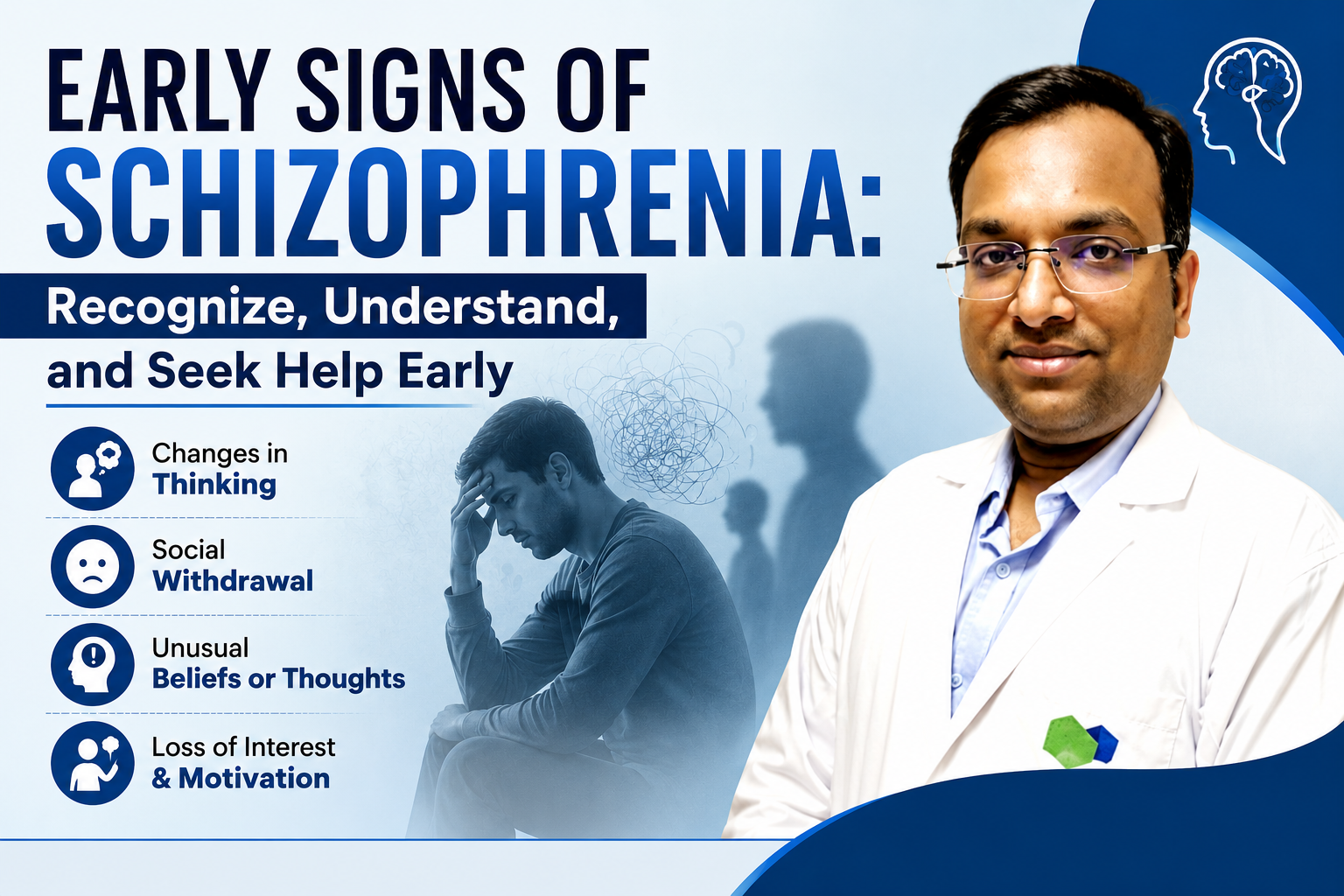
Early Signs of Schizophrenia: Recognize, Understand, and Seek Help Early
Schizophrenia is one of the most misunderstood mental disorders. People think of it as sudden, extreme breaks with reality; but schizophrenia rarely develops out of the blue. Usually developing over time, often with minor changes in attitude, mood, and behaviour that are simple to disregard as stress, lethargy, or just a phase.
Early indications of schizophrenia should be recognized as they may greatly change the course of the illness. Early diagnosis allows immediate treatment, which can lead to better symptom management and quality of life. It’s a big mental health disorder, but schizophrenia is treatable; and a lot of people, with the right support, do go on to lead meaningful lives.
Early symptoms, causes, diagnosis, treatment and when to seek professional help are all provided in this guide.
What Is Schizophrenia?
Schizophrenia is a mental disorder that affects thought processes, feelings and perception of reality. It is a psychosis which might lead to loss of touch with reality as a result of hallucinations, delusions and disorganized thinking.
The disorder manifests itself late in adolescence or early adulthood although it can also affect older people. Research has found that poor parenting, character flaws, or one traumatic incident aren’t to blame for schizophrenia, but rather a combination of genes, brain chemicals, and environmental triggers.
It should be remembered that schizophrenia is a treatable disease. Due to appropriate medication and therapy, a large number of patients lead fruitful and independent lives.
Early Signs of Schizophrenia to Watch For
Early indications seldom match the psychosis seen in movies. They are not as loud and they often manifest themselves gradually in behaviour, feelings, and cognition.
1. Social Withdrawal
Pulling away from friends, family, and past interests-one of the earliest and most frequently observed symptoms-is one among them. This is a clear change from how they used to be, not simply common introversion.
2. Erosion of Self-Efficacy
When someone stops taking care of their personal hygiene, has trouble keeping a routine or is underperforming at work or school, it’s a sign they might be experiencing more than just a rough patch.
3. Aberrant or Disordered Thinking
Early cognitive symptoms may include difficulty understanding during conversations, speaking about unrelated topics, or trouble organizing thoughts.
4. Odd Ideas or Distrust
Early indicators of developing delusions include growing mistrust of others, feeling under observation or target without obvious cause, or clinging to ideas (even little ones) that don’t match reality.
5. Perceptual Transformations
Some individuals describe subtle sensory alterations before full hallucinations start—sounds seem too loud, lights feel too bright, or there is a general feeling of abnormality regarding their environment.
6. Flat or Blunted Emotions
Even in circumstances that would typically elicit a reaction, a clear drop in emotional expression, eye contact, or vocal tone.
7. Sleep Disruptions
Often the first thing families see, persistent insomnia or a disturbed sleep-wake cycle usually shows up long before other symptoms.
8. Trouble Focusing
Difficulty concentrating on reading, discussions or tasks-often confused for stress, lack of interest or laziness.
9. Making Irritability or Anxiety Worse
Early signs could be unexplained anxiety, restlessness or impatience that doesn’t fit the circumstances.
One useful guideline of thumb: one or two of these signs taken alone isn’t always cause for concern. A professional examination is necessary, though, for a group of changes that last weeks and signify a significant change from the individual’s normal self.
Learn the signs and take informed steps today!
How to Seek Help for Schizophrenia
Knowing the symptoms is only half the road; most homes have a more difficult aspect, that of seeking expert care. Many times, fear, stigma, and mistrust about what follows will cause treatment to be postponed much longer than the symptoms themselves justify. Here is the actual form of that procedure.
Getting Past the Fear of Asking for Assistance
Many households hesitate because of:
- Stigma: anxiety about how friends, neighbours, or society will react.
- Denial: hoping the developments would pass naturally.
- Fear of drugs; misunderstandings regarding antipsychotics being addictive or having major adverse effects.
- worry over a label; assuming that a diagnosis would permanently shape the person.
Knowing that schizophrenia is a medical problem and not a weakness on your part may help you. It is important to take symptoms of mental illness seriously and treat them just as one would take diabetes or hypertension.
What Happens During the First Visit
A first psychiatric consultation is usually far less intimidating than families expect. It typically includes:
- A conversation, not an interrogation – the psychiatrist asks about mood, thoughts, sleep, behaviour, and daily functioning.
- Input from family members, since loved ones often notice changes the patient themselves can’t see.
- A physical or lab work-up, to rule out other medical causes of the symptoms.
- A treatment plan discussion, which may include medication, therapy or simply a follow-up to monitor symptoms over time.
Nothing is decided or diagnosed in a single rushed visit – it’s an ongoing, collaborative process between the patient, family, and care team.
Suspected psychotic symptoms call for a psychiatrist as your first contact; they can appropriately diagnose, treat, and prescribe medicine if required.
If you’re not sure, a general doctor can be a first stop; they will point you forward.
Consider it an emergency and instead of waiting for a scheduled appointment go right to a hospital’s emergency or psychiatric crisis center if the person is clearly upset, confused, or a threat to themselves or others.
How Schizophrenia Is Diagnosed and Treated
Evaluation at Nirvan Hospital usually consists in a thorough psychiatric examination, a review of symptom history and duration, and exclusion of other medical or psychological etiologies that could mimic psychosis.
- Treatment is typically a mix of: not always just medicine.
- Antipsychotic drugs to help control delusions, illusions, and disorganised thinking.
- To enable people to grasp and manage symptoms, psychotherapy-such as CBT for psychosis-helps.
- Family psychoeducation and therapy, as family participation greatly enhances results.
- Social and career guidance to enable patients keep their relationships, coursework or jobs.
Since schizophrenia is a chronic disorder that calls for continuous treatment, not a single quick cure, regular follow-up visits are essential.
Why choose Dr. Deeptanshu Agarwal
Early diagnosis and the right care could help to significantly control schizophrenia. Offering evidence-based and sympathetic mental healthcare, Dr. Deeptanshu Hanu Agarwal is a Consulting Psychiatrist and Medical Director at Nirvan Hospital, Lucknow.
Why patients trust Dr. Deeptanshu Agarwal:
- Skilled in identifying and treating schizophrenia and other mental diseases.
- Personalized treatment approaches made just for every patient.
- With medicine, psychotherapy, and rehabilitation help, evidence-based care.
- Patient-centric, sensitive and private method.
- Emphasize long-term healing, relapse prevention and better quality of life.
Early warning indications of schizophrenia in you or a loved one should prompt a consultation with Dr. Deeptanshu Agarwal to guarantee timely diagnosis and correct treatment for improved long-term outcomes.
Final Thoughts
Symptoms early on can be tough to identify, “because they can resemble everyday stress or mild anxiety, or the ups and downs in our mood,” Compton said. But persistent mood, behavior, thought, and social interaction changes should not be ignored.
Getting help professionally in your own time and in your own space will allow for much better potential outcomes, minimizing distress, and supporting longer term recovery. And, if you or a loved one are displaying these signs, the single most important step towards regaining your health is to be seen by a qualified mental health professional.
Frequently Asked Questions
What age are the early symptoms of schizophrenia typically seen at?
Even though the pre-symptomatic phase may begin earlier and remain unnoticed, it is mostly during the late teens and early thirties.
Can the early symptoms of schizophrenia be corrected?
Yes, with timely interventions, the symptoms can be greatly reduced or prevented from recurring despite being unable to cure the disease itself.
Does schizophrenia share many personalities?
No, that’s just a popular myth amongst people. Schizophrenia affects expression of ideas, senses and emotions; it is not dissociative identity disorder related.
Based on these symptoms, when ought a psychiatrist see me?
It’s time to visit a mental health expert if you have changes in your thinking, feeling, or behavior that have gone on for more than a few weeks and are disrupting your life.


Before It Escalates: Understanding The Early Warning Signs Of Schizophrenia
September 1, 2026 - 6:04 am[…] patients with schizophrenia usually come to doctors only when their symptoms are too obvious – they see or hear voices […]