

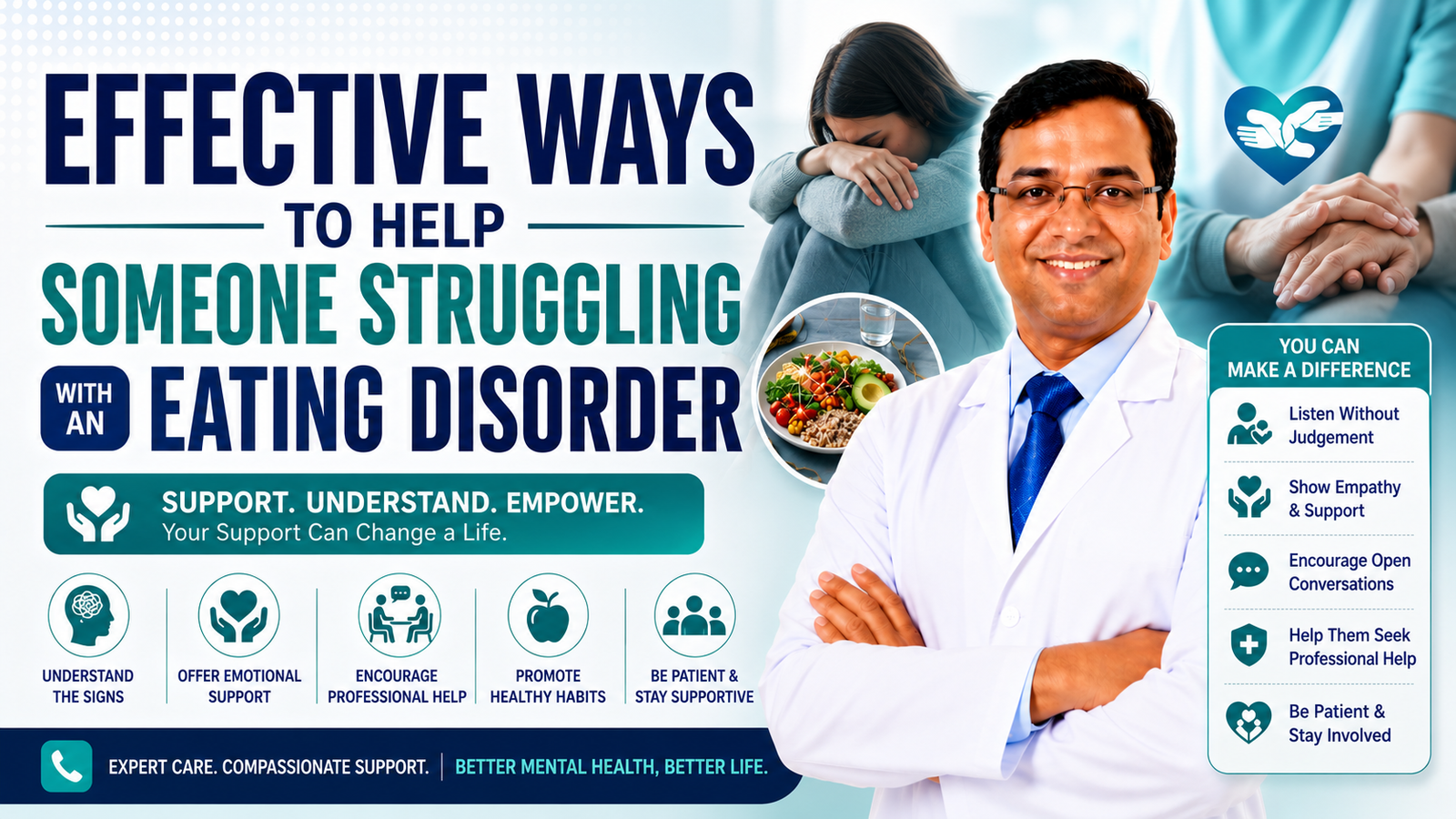
Effective Ways to Help Someone Struggling with an Eating Disorder
Watching the person you love battle an eating disorder can make you feel powerless, anxious, and at a loss for words. Eating disorders are complicated mental health disorders – they are never just “about food.” They can include profound emotional pain, anxiety, control and self worth issues. The good news is that there’s a chance for recovery, and family and friends support has a powerful impact on that journey.
This Companion provides practical and empathetic guidance on how to support someone with an eating disorder – including how to recognize warning signs, talk to someone when it’s difficult, and encourage professional help.
Understanding Eating Disorders
Anorexia nervosa, bulimia nervosa, binge eating disorder, other specified feeding or eating disorders (OSFED) are all types of eating disorders and they impact individuals across all age groups, genders, and walks of life. They are serious medical and mental health illnesses, not lifestyle choices or phases.
Because they tend to flourish in secrecy and shame, family members, partners, siblings and friends are often the first to sense that something is amiss – even before the person is willing to come to that realization themselves.
Common Signs of an Eating Disorder
Every person’s journey is unique, but some general warning signs to look out for include:
- Significant changes to eating patterns or very restrictive eating rules.
- Regular remarks about weight, body shape or appearance.
- Skulling from meal or communal eating.
- Going to the toilet straight after meals.
- Strenuous or compulsive exercising habits.
- Wearing loose fitting clothes to conceal body loss.
- Mood swings, nervousness, or more food-related stress.
- Significant weight gain or loss in either direction.
If you see a combination of these signs in anyone, it’s perhaps time to gently begin a conversation.
Effective Ways to Help Someone Struggling with an Eating Disorder
1. Get Informed Age First
Tell the Truth About Eating Disorders Before You Speak Up Spend some time learning about eating disorders on your own time before you talk. Knowing that these are not choices, these are illnesses that also happen to be and are very often connected to anxiety, trauma, perfectionism or control – you will be more equipped to respond with empathy than with frustration or judgement.
2. Choose the Right Time and Place
Choose a private, relaxed time to talk – never in the middle of a meal, right after a meal or with others listening in. Just be sure you both have the time and attention to avoid the conversation being cut short.
3. Lead with Love, Not Accusation
Replace “you” statements with “I” statements. For instance:
Instead of: “You never eat anymore.”
Try: “I’ve seen you getting more stressed around meal times lately and I love you.”
It unlocks defensiveness rather than locking it in place.
4. Don’t Comment on a Person’s Body Size or Looks
Comments that are intended to be positive such as “You look so healthy now” or “You’ve lost weight, are you OK?” might also be misconstrued or contribute to disordered thinking. Focus on feelings and health, not size or what a person eats.
5. When You’re Listening, Don’t Try to “Fix” It
Let them cry it out without getting involved, judging, or offering solutions right away. You may also be the one who listens without saying “Have you tried this?” and “If you do X, then Y will happen” and instead remarks “I can tell this is really tough for you.”
6. Don’t Have Power Struggles Over Food
Meddling – telling someone what to eat, policing their plate, or imposing demands during meals – usually doesn’t work. Control versus support
7. Encourage Professional Help
Anorexia and bulimia are conditions which usually require treatment by medical specialists, therapists, and nutritionists who specialize in this field. You may want to say:
Sarajane: Well, I’m no expert, but there are some.
Would“It is ok for you to speak to someone?”
Assist you in locating a specialist, make the initial appointment or accompany them if they want you to.
8. Patience is a Virtue – Recovery Is a Process
Recovery is nothing if not a line. Things can go downhill on the way. Patience, consistency and reassurance are needed more than one conversation can provide.
9. Remember to care for yourself, as well
It’s so hard to be with someone who is sick with an eating disorder. Think about joining a support group for caregivers or getting therapy for yourself so that you can continue to support your loved one without sacrificing yourself.
10. Reaffirm Your Commitment Periodically
“Hustle your daughters to the finish line of self-esteem.”
Things You Should Never Say to Someone with an Eating Disorder.
- “Just eat something.”
- “You don’t look like you have an eating disorder.”
- “Why can’t you just stop?”
Any comparison to someone else’s body or eating routines.
These are the type of well-intended comments that can actually create more shame and the walls come up again.
When to Seek Immediate Medical Help
Some signals for alerts are, dizziness, chest pain, extreme tiredness, irregular heart beat and symptoms of dehydration. If any of them occur, seek emergency medical care promptly.
How Dr. Deeptanshu Agarwal Can Help
Eating disorders are treatable and when treatment is started early, the outcomes are much better. Dr. Deeptanshu Agarwal is a kind, understanding and evidence-based provider to individuals and families impacted by eating disorders, who creates mind and body focused recovery treatment plans tailored to the unique needs of each individual. To schedule a private consultation, contact us if you or a loved one is in need.
Final Thoughts
To support someone who has an eating disorder means to be there – it doesn’t mean you have to have all the answers, but you do need to show them some patience and empathy and get them connected with the right professional help.” It is possible for recovery to occur when the appropriate help is found. Dr. Deeptanshu Agarwal can offer you professional guidance in this regard.
Frequently Asked Questions (FAQs)
How can I start a talk with someone about their eating disorder?
Find a time when you can both be calm and alone, come from a place of love and concern using “I” statements, and avoid bringing up weight or implying if/how much they’re eating.
What if they say they don’t have a problem?
This is common. Don’t argue with them or try and force their hand. Keep showing you care and softly broach the topic again in time. Denial tends to wane as trust grows.
Should I be concerned about what they eat?
No Limiting or controlling eating is usually anxiety provoking and resented. Positive reinforcement and support, not control is best.
Are eating disorders curable?
Yes. With the appropriate medical, nutritional and psychological assistance, a lot of people can recover completely and make their relationship with food and their body a good one.
How do I support them without losing myself in the process?
Set healthy boundaries, seek your own support system, and remember you can’t pour from an empty cup – your wellbeing matters too.