

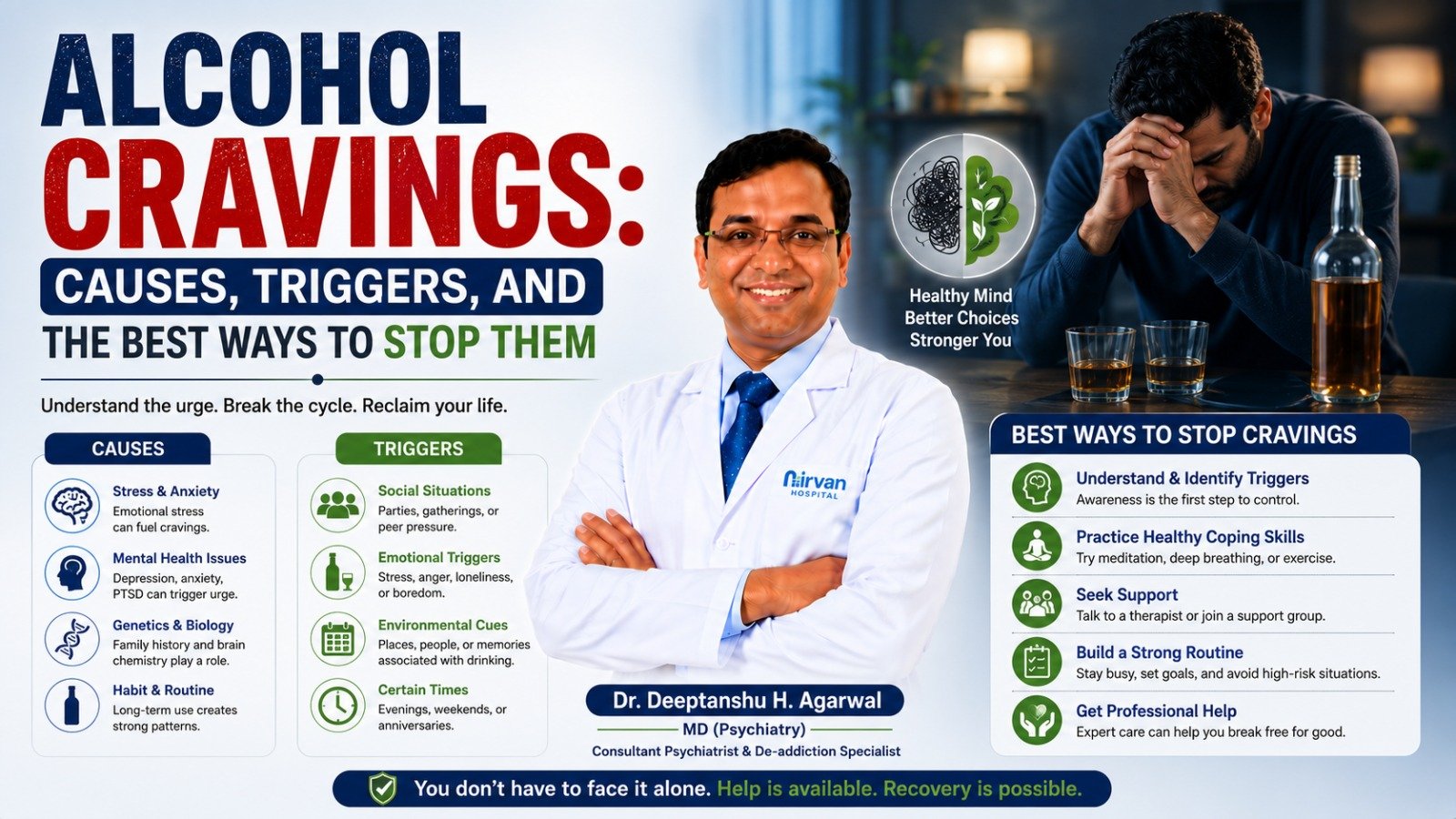
Alcohol Cravings: Causes, Triggers, and the Best Ways to Stop Them
One of those times when all you could think about was drink? Have you ever gone through one of those? Maybe it hit you coming from your job commute. Maybe it was a tough night, your boss said something that bothered you, the kids were misbehaving, and suddenly the need was more than everything else.
People who have an alcohol addiction usually experience shame, weakness, or a loss of control. Still, the reality is this: Willpower is not at all related to wants. They don’t have a fault of character. They are the outcome of the brain’s slow linking of alcohol with comfort, consolation, or compensation. Once this link is formed, the brain resists letting it go. The good news is that the first and most practical approach to manage wants is actually grasping them. The goal of this blog is to help you do precisely that.
What Are Alcohol Cravings, Really?
Consider a craving as your brain sends you a pressing message. Not a polite suggestion, a strong, occasionally too much push telling you right now you need a drink.
Deep within the brain’s reward system is the source of that message. Every time someone consumes alcohol, the brain produces dopamine, the neurotransmitter in charge of happiness, motivation, and that nice ahhh better feeling. The brain begins over time to link alcohol with either happiness or comfort. Once that connection has been made, the brain starts to actively seek that dopamine rush especially under stress, boredom, or discomfort.People can go weeks without drinking then one horrible afternoon later feel like they have never wanted anything more in their life than a glass of wine or a cold beer. The need was never really gone. It was just waiting for the correct trigger.
Knowing this does not qualify you as helpless. It makes a great difference because you now understand what you are really facing.
The Triggers Nobody Warns You About
Everyone is different, but most alcohol cravings are sparked by one or more of these common triggers. Some are obvious. Some sneak up on you.
Emotional triggers from the inside:
- a particularly demanding day with no outlet
- Feeling by oneself or cut off from those you love
- Sitting sorrow, loss, or grief
- anger with nowhere to go
- Boredom nearly unbearable
- That silent, crawling sense of not being enough
Triggers from the world around you:
- Walking past a liquor store or bar
- Seeing someone else at a party serve a drink
- A particular song, aroma, or even a TV commercial
- A celebration anniversary, marriages, promotions
- The conclusion of the workday, particularly if that used to involve drinking
- A challenging talk with someone close to you
- Being close to particular friends or family members connected to prior drinking
The cunning aspect of triggers is that they are not always immediately apparent. A need occasionally simply comes out and you have no knowledge of its source. Maintaining a little note on your phone with just a few words about what you were doing or feeling as the need struck will help to expose patterns you never observed before.
When Cravings Are Telling You Something More Serious?
Feeling a craving when you are trying to cut back is completely normal. But there are certain signs that suggest what you are dealing with may need more than self-help strategies alone.
Pay attention if any of these feel true for you:
- You promise yourself you will only have one drink and cannot stop there
- You have genuinely tried to quit or cut down, multiple times, and it has not worked
- Thoughts about drinking are taking up a large portion of your mental space every day
- Your work, relationships, or health are suffering because of your drinking
- You feel physically unwell shaky, sweaty, or anxious when you go without alcohol
- You need more alcohol than you used to in order to feel anything
- You drink to feel normal, not to feel good
None of these things make you a bad person. They make you someone who deserves real, proper support, not more willpower pep talks.
Practical Ways to Actually Manage Cravings
No one approach suits everyone. These strategies, which are all based on evidence rather than wishful thinking, have nevertheless really helped many people.
Ride it out- Most appetites start to go off after between 15 and 20 minutes. You can usually find it passes if you can hold off acting on a want, rise, go for a stroll, grab a glass of chilly water, or phone someone. This sounds easy. It’s not always simple. But it does happen more often than individuals would imagine.
Before they reach you, know your triggers- If Thursday evenings are tough, arrange something for them. If stress at work always causes cravings, make a strategy for what you will do instead of consuming alcohol as work gets tough. Anticipating your triggers drives you front rather than responding from behind.
Make something fresh to visit- Cravings fill a void. If you can begin creating other things that fit that same need, physical activity that drains you, a pastime you lose yourself in, connections with people who energise you, the desire has less space to develop.
Deal with stress properly- This is one of the most important things. If stress is your main trigger and you are not learning any other way to manage it, cravings will keep winning. Deep breathing, even just a few minutes of it, genuinely changes what is happening in your nervous system. So does regular exercise. So does getting enough sleep.
Have a conversation with someone- Not to be lectured, but rather to feel less alone with it. One of the most potent things acting against cravings is connecting friends, relatives, therapists, or support groups.
Think about expert help- Particularly, Cognitive Behavioural Therapy helps you identify and modify the ways of thinking that result in drinking. For some patients, a doctor-prescribed medicine can also greatly lessen the physical draw of temptations. These are actual, data-supported instruments, not last-ditch measures.
When It Is Time to Speak to a Professional?
Asking experts for assistance is quite honorable; there is no embarrassment at all. Actually, contacting an expert is among the most self-aware and courageous actions someone struggling with alcohol addiction may do.
A qualified professional will not evaluate you. They will go over your entire picture, background, mental health, and lifestyle with you and create a strategy that really matches you, not a conventional checklist.
Highly demanded mental health and addiction expert Dr. Deeptanshu Agarwal helps individuals negotiate just these kinds of difficulties. Dr. Agarwal offers complete evaluations and tailored treatment plans for people struggling with alcohol addiction and the mental health problems often accompanying it using a warm, evidence-based method. Talking to someone like him can be the turning point if things seem too large for you to manage on your own right now.
Final Thoughts
It’s difficult to have alcohol cravings. There is no reason to think otherwise. Particularly when you are striving your best and still suffering, they can be strong, draining, and very disheartening. Everyone’s recovery differs. For others, it’s a slow change in daily routines and way of life. Others need professional help, therapy, or medicine. Most of the time, it’s a mix of things that have been changed over time as life changes. What counts is not how you arrive there; rather, it is that you keep moving in that path.
Right now, if things feel out of hand, please give talking to someone who really knows addiction some thought. For people battling alcohol addiction and the accompanying mental health issues, Dr. Deeptanshu Agarwal provides kind, sympathetic, tailored attention. With the appropriate expert, a thorough evaluation might provide you genuine clarity and a genuine plan.
Frequently Asked Questions
Why do I still get cravings even though I stopped drinking a while ago?
The brain just remembers. Years of alcohol have created neurological connections that do not just go away overnight. Even long after the previous drink, memories, emotions, and surroundings cues can still trigger past habits. Normal and with time and the proper encouragement, this progressively heals.
How long do alcohol cravings actually last?
A single craving often peaks in fifteen to twenty minutes then disappears. Longer patterns show that cravings usually peak in the first few weeks after quitting and then get weaker and less frequent over several months. Some people may rise sometimes for years, but they get far more manageable.
Is it possible for cravings to stop completely?
For many people, yes or very nearly so. With consistent effort, therapy, and lifestyle changes, cravings often fade to the point where they barely register. That said, everyone’s experience is different, and staying connected to support helps even when things feel much better.
Are there any foods or drinks that actually help with cravings?
Keeping blood sugar stable with regular, balanced meals genuinely helps protein, healthy fats, and slow-release carbohydrates are your friends here. Staying properly hydrated matters more than people realise too. And having something satisfying to sip chilled water with lime, a warm herbal tea can help fill that physical habit of reaching for something to drink.
Can therapy really help with cravings or is it just talking?
Therapy particularly Cognitive Behavioural Therapy is one of the most well-researched tools for reducing alcohol cravings. It helps you spot and change the specific thought patterns and emotional responses that lead to drinking. It is not just talking. It is learning skills that genuinely change how the brain responds to triggers.