

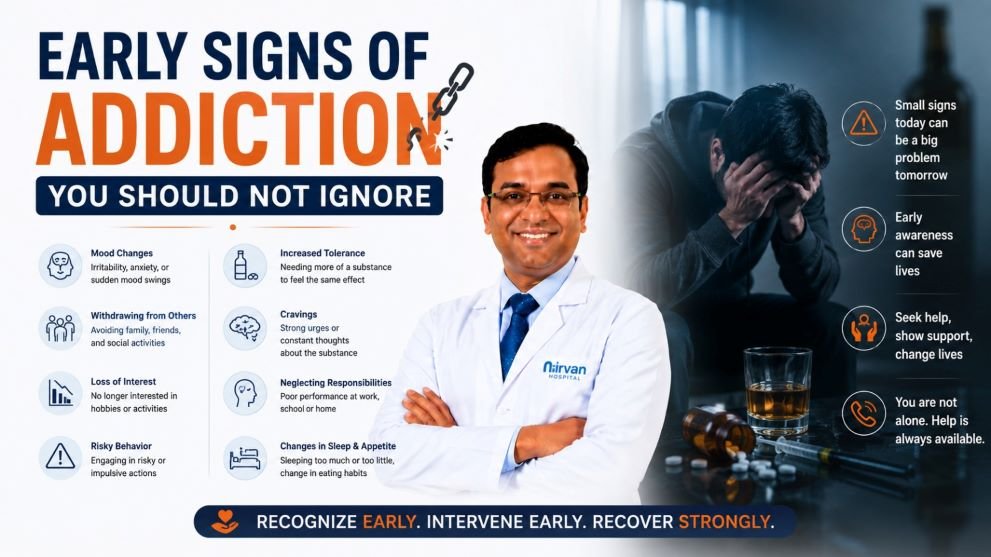
Early Signs of Addiction You Should Not Ignore
Addiction rarely begins with dramatic warning signs. In most Indian households, it quietly starts – a behavioral change, emotional withdrawal, a sudden shift in routine that families often dismiss as stress, bad company, or a temporary phase. Unfortunately, by the time the seriousness becomes clear, dependency has already taken root.
Signs of Aaddiction recovery specialistddiction to Never Ignore
Addiction may not always be obvious. Early in a person’s addiction, the signs may not be as prominent as when the disorder progresses. The following are 12 signs of addiction that should never be ignored:
1. Increased Secrecy and Isolation
This one shows up early and gets explained away constantly.
Someone starts hiding activities. Lying about whereabouts. Avoiding conversations that might touch on certain habits. Spending more time alone than usual. Pulling away from family and friends in ways that feel like distance without an obvious explanation attached to them.
As addiction develops, people become protective of behaviors they know others would question. The secrecy isn’t random. It’s a response to something they’re not ready to face themselves yet.
2. Loss of Interest in Previously Enjoyed Activities
Things that used to matter start mattering less. Gradually. Quietly. Without announcement.
Hobbies get dropped. Sports, social events, activities that once felt genuinely enjoyable get abandoned. Invitations get declined more often. Participation in regular things falls off. The enthusiasm just isn’t there anymore – and more and more time goes toward the addictive behavior without the person fully registering that the shift has happened.
3. Changes in Mood and Personality
People close to the person often notice this before the person themselves does.
Irritability that appears from nowhere. Unexplained anger that doesn’t match what’s happening. Anxiety that’s become more constant than occasional. Periods of depression that come and go. Emotional swings that feel out of character. A sensitivity to things that didn’t used to land that way.
Family members describe it as the person seeming familiar but slightly off. Hard to put into words. Impossible to fully ignore.
4. Difficulty Controlling Use
The gap between intention and what actually happens – that’s what this sign is really about.
Using more than intended. Spending longer periods engaged than planned. Attempts to stop that genuinely don’t hold. Promises made to themselves about cutting back that keep getting broken. Recognizing clearly that something has become a problem and still being unable to change it despite that recognition.
That gap – between knowing and being able to act on what you know – is where addiction actually lives.
5. Increased Tolerance
The body adapts. What worked before stops producing the same effect.
More of a substance becomes necessary to get the same result. Use becomes more frequent. Engagement periods stretch longer. The brain reduces its response to repeated stimulation and pushes toward increased consumption to compensate. Not a sign of greater enjoyment. A sign that something has shifted significantly.
6. Neglecting Responsibilities
Things that were handled effectively before they started slipping. Quietly first. Then more visibly.
Missed deadlines. Declining work performance. Poor academic results. Household responsibilities getting ignored. Frequent absences without clear explanation. The obligations that used to get managed without much thought become increasingly difficult to maintain – not from laziness, but because addiction has consumed what used to go toward everything else.
7. Changes in Sleep Patterns
Sleep disturbances show up early and they show up consistently.
Staying awake through the night. Oversleeping during the day. Chronic fatigue that rest doesn’t fix. Sudden insomnia without an obvious cause. Alcohol and drugs interfere directly with the brain’s sleep regulation – which is exactly why sleep correction becomes a core part of recovery in structured de-addiction programs.
8. Financial Problems
Money-related behavior changes get ignored more than almost anything else. And they often show up before the physical signs do.
Borrowing more often than makes sense. Valuables going missing. Expenses that don’t add up. Sudden financial stress that’s inconsistent with someone’s income or circumstances. Many people admitted to rehabilitation settings look back and identify financial instability as one of the earliest signs – something families only recognize clearly afterward.
9. Physical Health Changes
Eventually addiction shows up in the body in ways that become hard to explain away.
Sudden weight changes in either direction. Hygiene declining noticeably. Frequent headaches. Bloodshot eyes. Appetite changes. Fatigue that doesn’t shift no matter how much rest happens. Getting sick more often than usual. The specific symptoms depend on the substance or behavior – but physical changes appearing alongside other warning signs deserve serious attention rather than being written off as stress or aging.
10. Continuing Despite Negative Consequences
The behavior continues even when the harm is visible, acknowledged, affecting every area of life.
Relationship conflicts. Health deteriorating visibly. Financial losses. Workplace difficulties. Legal problems. The person may see exactly what’s happening and still feel genuinely unable to stop. That’s not a repeated choice being made. It’s a pattern that has become very difficult to break without help from outside.
11. Strong Cravings and Preoccupation
The substance or behavior starts occupying mental space that used to belong to other things.
Constantly thinking about the next opportunity. Distracted by cravings that won’t settle. Prioritizing use over activities that used to feel important. Planning the day – consciously or not – around when the next opportunity will come. These preoccupations build over time and become harder to conceal from people close by.
12. Increased Risk-Taking Behavior
Judgment gets impaired. Decisions get made that wouldn’t have been made before.
Dangerous driving. Unsafe situations. Financial risks that make no rational sense. Reckless behavior that feels out of character to everyone who knows them. The drive to satisfy cravings overrides concerns about safety in ways that simply weren’t present before the addiction took hold.
Don’t ignore the warning signs – Book An Appointment Now!
Final Thoughts
Addiction doesn’t start with a dramatic moment most of the time. It grows quietly- through warning signs that get explained away, minimized, or simply not recognized for what they are until too late.
Families who catch the early shifts – behavioral, emotional, in daily routines – can change the trajectory significantly. Years of suffering avoided. Recovery is easier when it starts earlier.
Awareness is the first tool. Empathy is the second. Knowing when and how to act is the third. Together those three things are what actually prevent addiction from taking full hold.
Frequently Asked Questions (FAQs)
What are the early signs of addiction?
Mood swings, secrecy, withdrawing from people, losing interest in things that used to matter, neglecting responsibilities, difficulty controlling use. These appear gradually and get dismissed as stress before the pattern becomes undeniable.
Can addiction develop gradually?
Yes – and that’s exactly what makes it so difficult to catch. It accumulates slowly through small changes that each seem individually explainable at the time.
Is addiction only related to drugs and alcohol?
No. Gambling, gaming, internet use, shopping, social media – behavioral addictions follow the same patterns and cause comparable harm.
When should someone seek help for addiction?
When addictive behaviors start consistently affecting health, relationships, work, or daily life. Waiting for a crisis isn’t necessary and makes everything harder.
Can addiction be treated successfully?
Yes. With early intervention, proper treatment, and genuine ongoing support, long-term recovery is achievable. Earlier help means a smoother process.