

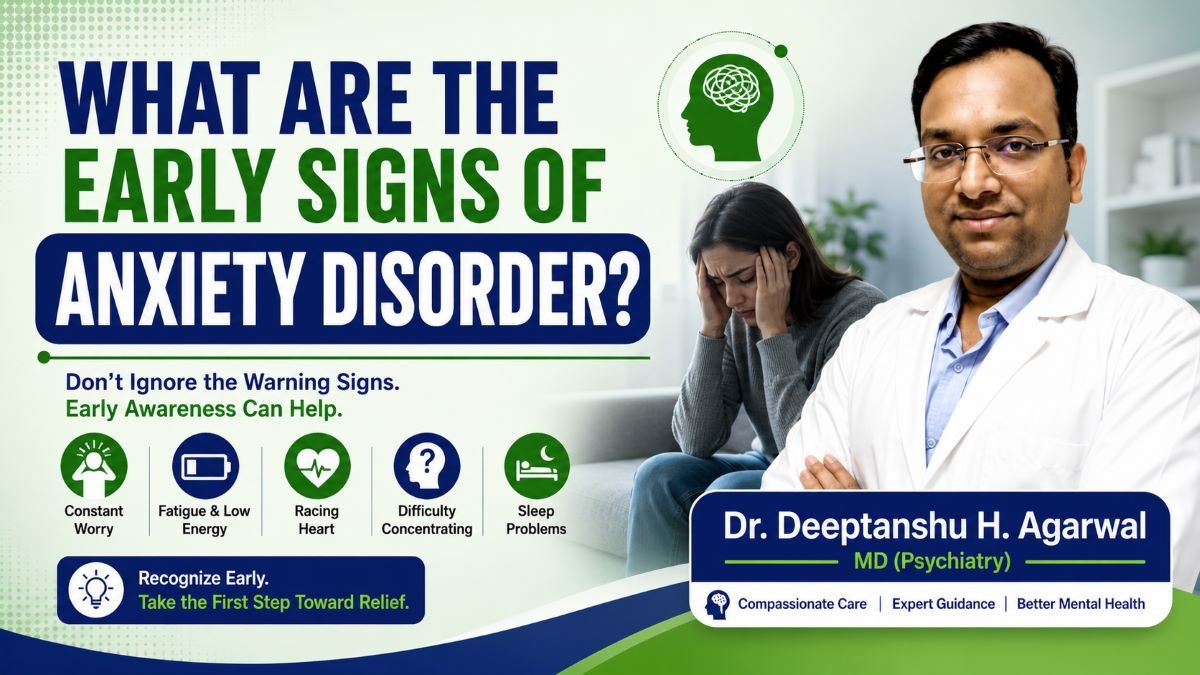
What Are the Early Signs of Anxiety Disorder?
Key Takeaways
- Anxiety disorder is more than occasional stress or worry. It can persist even when there is no immediate threat and may interfere with daily life.
- Early signs of anxiety can appear as physical, emotional, and behavioral symptoms.
- Common physical symptoms include a racing heart, muscle tension, headaches, fatigue, stomach problems, shortness of breath and sleep difficulties.
- Emotional signs may include persistent or excessive worry, irritability, feeling constantly on edge, difficulty concentrating, and a sense of fear or dread.
- Behavioral changes can include avoiding social situations, procrastinating because of fear, seeking frequent reassurance, restlessness and losing interest in activities once enjoyed.
- Anxiety disorders can develop from a combination of genetic, biological, environmental, and life-experience factors.
- If anxiety does not go away or begins affecting your work, relationships, sleep, or everyday activities, consider speaking with a qualified mental health professional.
- Anxiety disorders are treatable. Depending on the type and severity, treatment may include psychotherapy such as CBT, lifestyle changes, medication, or a combination of these approaches.
- Recognizing anxiety symptoms early can encourage timely professional support and may help prevent symptoms from becoming more disruptive to daily life.
Everyone occasionally gets worried about job interviews, major decisions, or tests. Usually this form of worry goes away after the present moment. For other individuals, however, anxiety refuses to disappear and builds up until it interferes with their normal lives. At such a point, anxiety has progressed from just a stressful feeling to becoming an anxiety disorder.
The difficulty with recognizing anxiety lies in the fact that it does not present itself through one obvious symptom. No, anxiety is experienced through racing thoughts, tightness in your chest, bad sleeping habits, and mood swings, such that at one point you will realize that you have not been okay for several weeks now.
This article, reviewed by Dr. Deeptanshu Agarwal, a Consultant Psychiatrist in Lucknow, explains what anxiety disorder is, its early warning signs, common causes, and when it’s time to speak with a psychiatrist.
What is Anxiety Disorder?
Anxiety disorder refers to mental health problems whereby one experiences too much anxiety or fear that does not correspond to the current real situation. It does not disappear by itself. This problem is different from normal stress that may occur during particular occasions but fades off when the occasion ends.
According to diagnostic frameworks such as the DSM-5 (used by psychiatrists worldwide), anxiety disorders include several distinct types:
- Generalized Anxiety Disorder (GAD) – continuous and extreme anxiety concerning everyday matters.
- Panic Disorder – severe panic attacks accompanied by physiological symptoms.
- Social Anxiety Disorder – intense fear associated with social and performance situations.
- Specific Phobia – constant fear of something particular.
- Separation Anxiety Disorder – extreme fear of separation from loved ones.
Though the causes may vary, the basic principle remains identical – the brain’s alarm system never turns off at the right time and keeps a person constantly on high alert.
Early Signs of Anxiety
Anxiety is not sudden but tends to occur slowly and can easily be ignored by the mind as just a stressful week or “tiredness.” Identifying these symptoms in its early stages can have a significant effect on receiving assistance much earlier.
Generally, there are three main early symptoms of anxiety disorders. They include physical symptoms, emotional symptoms, and behavioral symptoms.
Physical Symptoms
Anxiety manifests in the body as well, usually before a person even realizes they are nervous. It is not limited to the head. Common physical indications include:
- Heart racing or pounding in your chest
- Shortness of breath or feeling like your chest is being squeezed
- Muscle tension, especially in your neck, shoulders and jaw
- Constant headaches.
- Trembling or sweaty hands
- Feeling weary even if you have had adequate rest
- Sickening, stomach problems, or loss of appetite
- difficulty going to sleep or staying asleep
Patients normally seek advice from general practitioners, only to realize that their test results are perfectly fine. This could be an indication that anxiety, not any physical condition, is responsible for the problem.
Emotional Symptoms
However, the emotional component of anxiety tends to be more discreet, but it is what typically drives individuals to seek treatment. These include:
- An overwhelming fear that seems imminent
- An excessive preoccupation with issues which others perceive as minor
- The inability to control worry
- Being easily startled or on edge
- Irritability
- Having trouble concentrating or “mind going blank”
- A sensation of losing control, especially during panic attacks
Behavioral Symptoms
Anxiety begins to affect the way a person behaves, and not just the way he feels. The first behavioral symptoms may be:
- Social withdrawal, skipping meetings or gatherings without a specific reason.
- Postponement of actions due to a fear of “messing up”.
- A need for constant assurances from friends and relatives
- Restlessness – fidgeting, pacing, or being unable to sit still.
- Withdrawal from hobbies and activities previously enjoyed.
- When the application of habitual activities such as overeating, smoking, and alcoholism to help “calm down”.
It is only when some of these physical, psychological, and behavioral symptoms occur at the same time for more than two weeks that we need to take note.
Quick Reference: Early Signs at a Glance
| Category | Common Early Signs |
| Physical | Tachycardia, muscle rigidity, tiredness, cephalalgia, sleep deprivation, flatulence, nausea. |
| Emotional | Persistent anxiety, sense of doom, agitation, inability to focus, on edge. |
| Behavioral | Avoiding social events, asking for reassurance, procrastinating, giving up hobbies. |
Causes
Anxiety disorder rarely has one single cause. It usually develops from a mix of factors, including:
- Brain Chemistry – Imbalance of neurotransmitters that control emotions and reaction to fear.
- Genetics – History of anxiety or other psychological disorders within the family.
- Life Experiences – Traumatic experiences, abuse, losses, or stressful situations.
- Personality – Perfectionist or overly critical personality or someone who avoids risk or uncertainties.
- Underlying Medical Problems – Disorders of the thyroid gland, other medical conditions, or substance use.
Risk Factors
Certain factors can make a person more likely to develop anxiety, though having them doesn’t guarantee it. These include:
- Workplace stress, stress at home or school
- Stress in childhood due to neglect
- Family history of anxiety or depression
- Too much caffeine, alcohol, or drugs
- Big changes like unemployment, breakups, or grief
- Some physical diseases or taking medication
Diagnosis
There is no one blood test that can determine whether one has anxiety disorder. Typically, this kind of illness is identified via a lengthy clinical interview wherein the psychiatrist discusses the symptoms, the length of time that they have persisted, how they interfere with normal activities, and the exclusion of other physical ailments including thyroid disorders or heart problems. Screening tools such as the GAD-7 form are commonly employed, together with family and lifestyle information.
Treatment Overview of Anxiety Disorder
The positive aspect about anxiety disorder is that it is one of the most treatable psychological illnesses as long as it is identified early enough. The treatment does not involve one solution only but a number of them combined based on the needs of the particular patient.
Psychotherapy is always used first. One type of psychotherapy called cognitive behavioral therapy (CBT) is especially useful because it allows one to realize what thoughts exactly cause anxiety – for example, catastrophizing and making a threat appear much greater than it really is.
When the anxiety is of medium to high intensity, or when it is severely disrupting one’s work, relationships or sleeping pattern, medications might be advised. SSRIs are one of the drugs often prescribed in order to maintain balance in the brain chemicals responsible for regulating the mood and fear.
Lifestyle adjustments can positively impact the treatment of anxiety disorder more than people realize. Exercise has been found to lead to lower levels of stress hormones and higher levels of happiness.
Certain empathic activities such as relaxation, deep breathing, journaling and participating in support groups may function as adjuncts to clinical therapy.
The most important thing is that the treatment is personalized. Everyone has a different experience with anxiety, and a successful treatment regime usually involves changes as time goes on – from accurate diagnosis, then therapy and lifestyle changes and finally medication if needed.
When to See a Psychiatrist
It’s time to consult a psychiatrist if:
- The symptoms of fear persist for at least two weeks.
- Concern appears to be unwarranted or is not manageable.
- Daily tasks, work efficiency, social interactions, or rest are influenced.
- Shortness of breath or chest pain are common signs.
- You have developed a fear-induced tendency of avoidance.
- The anxiety disorder is associated with depressive symptoms.
Early intervention usually results in better and faster outcomes than waiting until symptoms are unmanageable.
Final Thoughts
The onset of an anxiety disorder is silent in nature and occurs because of various changes in behavior and emotions that one may tend to overlook. Early warning signals to be aware of are palpitations before daily activities, constant anxiety that won’t go away, or even the slow avoidance of events you used to be at ease with. The earlier you spot them, the simpler it becomes to control anxiety before it affects your job, relationships, or health adversely.
Should you have recently observed any of the warning signs above in yourself or someone close to you, you might want to consult a specialist instead of hoping it would just go away on its own.
Dr. Deeptanshu Agarwal is a Consultant Psychiatrist in Lucknow with more than 10 years of experience, offering personalized, evidence-based treatment for anxiety disorders and related mental health conditions.
Frequently Asked Questions
What is usually the first sign of anxiety disorder?
For most people, the earliest symptoms are: chronic worry that is difficult to control, and is frequently accompanied by physical symptoms such as pounding heart or muscle tension.
Can anxiety disorder go away on its own?
Benign situational anxiety will dissipate when the stimulus ends. But a diagnosable anxiety disorder typically requires appropriate treatment-therapy, lifestyle modifications or medication – to significantly improve.
Is anxiety disorder the same as normal stress?
No, because stress is associated with a particular trigger and will resolve once that trigger goes away. Anxiety is more chronic and occurs regardless of whether there is a trigger, interfering with functioning.
Can children show early signs of anxiety too?
Clinginess, tantrums, difficulty sleeping, stomach pain or refusal to go to school can all be symptoms of anxiety in children.
How is anxiety disorder diagnosed?
A psychiatrist evaluates for anxiety disorder by conducting a clinical history and examination, with a review of symptoms, along with completion of symptom rating scales, and after exclusion of physical causes.
Is medication always required for anxiety?
Not always. A lot of people get by with just therapy and lifestyle adjustments for their anxiety. Drugs are usually only used in moderate or severe cases.


Breaking Free From Alcohol Cravings: Practical Steps For Recovery
August 29, 2026 - 10:31 am[…] triggers include stress, anxiety, loneliness, boredom, tiredness, withdrawal symptoms, social situations and places associated with […]
When Should I See A Psychiatrist For Anxiety?
September 8, 2026 - 6:04 am[…] good test of whether your symptoms amount to an anxiety disorder or stress is how long they last and their impact. Temporary worries go away after the trigger […]
Mobile Phone Addiction And Mental Health: What Constant Screen Time Does To Your Brain
October 3, 2026 - 5:37 am[…] and systematic reviews have shown links between symptoms of sadness, anxiety and poor sleep and troublesome smartphone usage. Most of the research, however, is observational, […]