

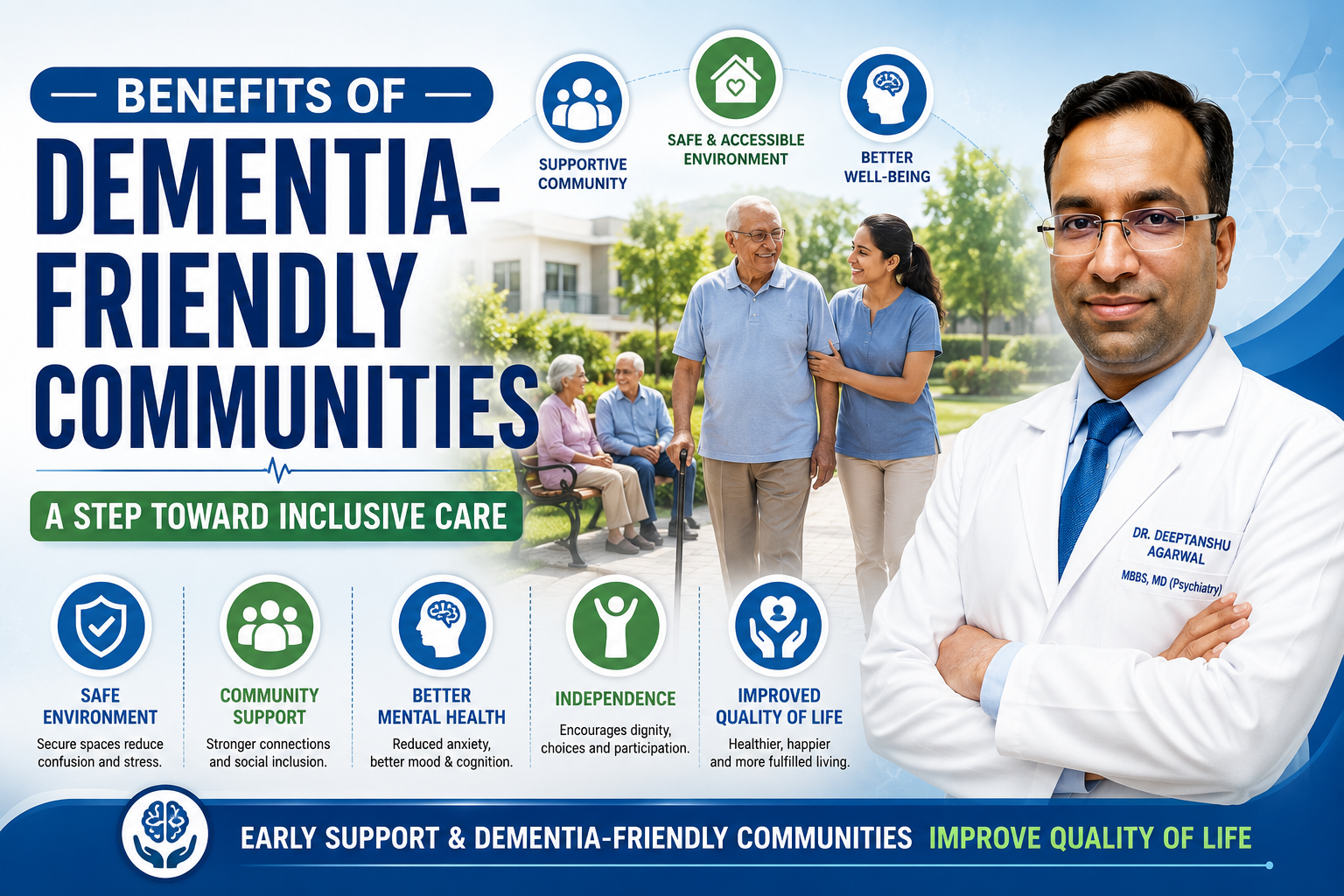
Benefits of Dementia-Friendly Communities: A Step Toward Inclusive Care
Dementia is not only concerned with memory issues but it also affects many other areas. It affects how one sees his environment; this implies that he will not be able to recognize those shops, roads, or people who he once knew very well. The growing number of people suffering from dementia in India and elsewhere requires us to reconsider the structure of our communities; this is when dementia friendly communities come into play.
A dementia-friendly community is one whereby those living with dementia are appreciated, respected, and encouraged to live as independently as they can. Not a hospital ward or a different building. This can be seen through the design of the areas where people live, do their shopping, banking, enjoy parks, and use public transport while taking into account the difficulties experienced by people with dementia.
The main objective of this article is to examine dementia friendly communities in terms of their definition, significance, and advantages.
What Is a Dementia-Friendly Community?
A dementia friendly community is an area where people, companies, and organizations are informed about dementia and assist in eliminating barriers experienced by people with dementia.
This could consist in:
- Shop personnel taught to spot indications of disorientation and react calmly
- Simple wording and graphics instead of complex wording on clear signage
- Well-lit public spaces and streets free of noise and garbage
- Public transportation personnel educated to help visitors who might be confused
- People in the neighborhood who know that memory problems or recurrent questions are symptoms of the disease, not disrespect or negligence
The primary aim would be to allow the people suffering from dementia to continue living in a dignified manner instead of being locked up at home because of fear or embarrassment.
Importance of Dementia-Friendly Communities
While healthcare may seem very important, one cannot deny the fact that the environment of a person’s life would have a big impact on his/her life.
A caring, compassionate community will ensure that there is no emotional decline due to the sense of loneliness, fear of rejection, and stigma.
Caregivers of individuals who have been diagnosed with dementia claim that the hardest part of being a caregiver is not only managing the symptoms but dealing with people’s reaction to the symptoms as well. Thus, a dementia-friendly community will reduce this burden through acceptance, not exclusion.
Important Benefits of a Dementia-Friendly Community
1. Better Patient Safety
Physical safety is likely one of the most obvious advantages that people with dementia can get when they live in a surrounding environment that suits their needs. Patients with dementia have a tendency to wander off and become lost as well as disoriented and confused due to the fact that they find themselves in a strange environment.
2. Greater Dignity and Independence
Living with dementia does not mean that one should instantly lose all independence. Based on the theory that with proper support patients may still conduct little errands, visit familiar locations, and participate in basic everyday activities, dementia-friendly communities are created around this helps one keep a feeling of dignity and self-worth that is often lost when one’s independence is removed too quickly.
3. Minimal Caregiver Load
Whether they are family members or pros, caregivers-that is-often report great levels of stress and exhaustion. Understanding dementia and support from the society at large-such patience at a checkout counter or help in a public area—relieves a great deal of pressure on careers. This common responsibility lets carers pay more attention to emotional support rather than always being on guard.
4. Less Social Isolation
Many times, fear of judgement or humiliating circumstances drives families to completely remove dementia patients from society. This isolation might hasten mental and emotional deterioration. Communities that are dementia-friendly help to slow down the onset of symptoms and enhance mental health by means of ongoing social life engagement.
5. Early Identification and Encouragement
Early indicators are usually seen first in towns where people are aware of dementia; neighbors, merchants, and local workers as well as family members could help. Earlier diagnosis and treatment that is proven to raise patients’ long-term results and quality of life can follow from this.
6. Better Family Support Arrangements
With the knowledge of dementia in the community, the families will no longer feel alone as they go through their journey in caring for the patient. This is part of what dementia friendly initiatives involve. They offer the family an opportunity to vent out about their experiences and seek help and guidance.
7. Better Emotional and Mental Well-being
The patients with dementia, who live in supportive environments, often show less sadness, irritation and anxiety. The emotional stability of the patients improves due to routine activities, polite behavior and sense of belongingness.
8. Social and Economic Advantages for Society
Programs that are dementia-friendly help families and patients as well as help to lower the long-term load on medical systems. Fewer accidents, postponed institutionalisation, and improved mental health results all help to reduce healthcare expenses and produce a more inclusive society generally.
Contact Us for Compassionate Dementia Care Guidance!
Practical Ways Communities Can Become More Dementia-Friendly
Building a setting suitable for dementia needn’t entail major structural changes. Among the sensible first measures are:
- For storekeepers, bank tellers, and public transportation employees, provide dementia awareness training.
- Encouraging local companies to be patient and flexible with senior clients.
- Putting basic, obvious signs in public areas.
- Helping regional dementia awareness initiatives and caretaker support groups.
- Promoting honest talks about dementia will help to lower stigma.
- Small, daily initiatives at the grassroots level can significantly improve dementia patients’ quality of life.
The Role of Medical Guidance in Dementia Care
Although the help of locals is highly important, it should be noted that the help of specialists is necessary for efficient disease management. Routine tests make it possible to monitor the progress of the disease, change the approach to treatment, and cope with various symptoms like anxiety, insomnia, and irritability.
The optimal treatment plan for people suffering from dementia is achieved through the use of both medicine and an understanding environment.
Final Thoughts
Dementia-friendly towns are one of the revolutionary moves from segregation and medical approaches to dementia care to an integrated system of assistance for dementia sufferers that preserves their autonomy and dignity while reducing the burden of their relatives.
Creating such communities is a group effort including families, local companies, healthcare professionals, and society at large. If you or a loved one is negotiating a dementia diagnosis, timely medical advice together with a supportive social environment can greatly improve quality of life.
See a professional who can assist you in developing a care plan appropriate for your particular needs for individual advice on dementia treatment and management.
Frequently Asked Questions (FAQs)
In what way is the dementia friendly community playing its role?
Through reduction of barriers to environment and society, the main role played here is the role of assisting individuals with dementia live a dignified, independent, and safe life.
What can families do to create dementia-friendly communities?
Families can also be involved in the process of creating dementia friendly societies.
Families can help local companies to be more welcoming by helping to raise awareness among their neighbours and support community support initiatives.
Does living in a dementia-friendly environment slow down disease development?
Though it doesn’t cure or reverse dementia, the lower stress, social involvement, and emotional stability related with such communities can benefit general well-being and could help to better control symptoms.
In a dementia-friendly society, is expert medical attention still required?
Affirmative. For dementia, community help complements but does not substitute routine medical evaluation and treatment.