

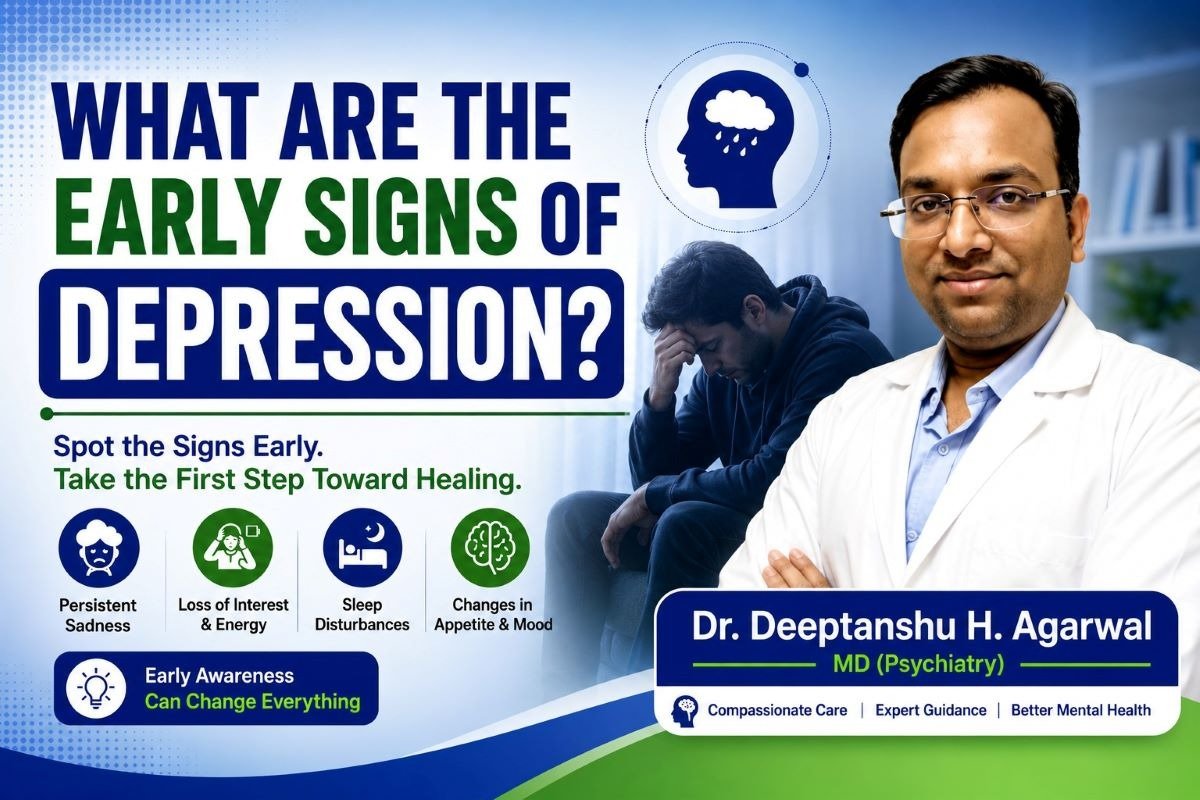
What Are the Early Signs of Depression?
Key Takeaways
- Early signs of depression can include persistent low mood, loss of interest, fatigue, sleep or appetite changes, difficulty concentrating, irritability and social withdrawal.
- In teenagers, depression may appear as irritability, declining academic performance, withdrawal from friends, behavioural changes or unexplained physical complaints.
- In adults, common warning signs include low motivation, constant tiredness, difficulty managing work or responsibilities and loss of interest in previously enjoyable activities.
- In older adults, depression may present as memory problems, unexplained pain or fatigue, loss of enthusiasm, reduced self-care or increased dependence on others.
- When several symptoms persist for two weeks or longer or begin affecting daily life, relationships, work or studies, a professional evaluation is advisable.
- Early diagnosis and appropriate treatment-which may include psychotherapy, medication, lifestyle changes or a combination of approaches-can help manage depression and support recovery.
- If depression is accompanied by thoughts of self-harm, suicide or severe hopelessness, seek immediate professional help.
Depression is often mistaken for simply feeling sad for a long time. In reality, most depression starts mild – showing up as subtle changes in sleep, irritability or a fading interest in hobbies and things that used to make you happy.
Early detection of depression, therefore, is important. The sooner one detects depression, the better it becomes to deal with it. This is a resource that provides comprehensive information on the early symptoms of depression, forms of depression in different ages and how to treat it.
What Is Depression?
Depression, also called Major Depressive Disorder, is a mood disorder in which a person’s thoughts, feelings, and actions are impacted by a low mood state. Depression is not the same as being depressed because of some tough days or a week in your life. Depression usually lasts for at least two weeks, and the individual becomes unable to function in his job and relationships, and even take care of himself.
Depression could happen to anybody, whether he is a college student, professional, parent, or even a senior citizen.
Early Warning Signs of Depression
Depression usually does not occur abruptly. It is a condition that develops slowly, and its early symptoms are sometimes confused with stress, exhaustion or just “a phase.” The following is some of the most commonly seen early symptoms of depression:
- Consistent low mood – Experiencing persistent sadness, emptiness, or flatness in your moods throughout the day.
- Loss of interest – Hobbies, social interaction, and other activities which used to be enjoyable become unexciting or tedious.
- Changes in sleep patterns – Having problems falling asleep, frequent waking during the night, or excessive sleeping.
- Changes in eating habits or weight loss – Changes in appetite and weight, not resulting from efforts to lose weight.
- Fatigue and lack of energy – Feeling excessively tired even after having had enough sleep, and inability to do routine tasks.
- Trouble concentrating – Difficulty focusing while studying and working, problems with memory and slow decision-making.
- Irritability – Increased tendency to get upset by small things and becoming more quick-tempered.
- Withdrawal from social life – Canceling plans and calls and pulling back from friends and relatives.
- Feeling worthless or guilty – Self-deprecating thoughts and tendency to focus on past mistakes.
- Unexplained physical complaints – Frequent headaches and muscle pains, or digestive disorders, unresponsive to treatment.
One of these symptoms in isolation does not have to be considered a cause for worry. However, their combination occurring persistently for more than two weeks is something you should pay attention to.
Early Signs in Different Age Groups
There is a great difference between depression in a teenager, an active adult, and an older individual. Through recognizing the age-specific pattern, one will be able to recognize the problem earlier.
In Children and Teenagers
- Irritation or anger, which can be more noticeable than depression
- Poor performance at school or suddenly lacking interest in it
- Feeling sick such as stomachaches or headaches without any physical illness
- Withdrawing from peers or being isolated too much
- Altering food and sleep patterns
In Young Adults
- Always tired despite having had a full night of sleep
- Use of alcohol, smoking, or other ways to cope
- Inability to meet deadlines in college or work
- Lack of connection to friends and inability to think about future plans
In Elderly Individuals
- Memory slips or confusion that can be confused with aging
- A loss of enthusiasm for family occasions or routine activities
- Pain or fatigue for no apparent reason
- More dependence and less interest in self-care
Since depression in the elderly is commonly accompanied by physical illness or early stages of cognitive decline, it is often unrecognized. Relatives are generally the first to see a difference.
Can Early Depression Be Treated?
Yes – and this is the most important point. Depression caught in its early stages can be treated much easier than depression that has been neglected for months or even years. In many cases, the treatment of depression early enough can lead to quicker recovery, stop any additional worsening of depression, and prevent a possible recurrence of it.
Treatment never takes a uniform course. In most cases, a psychiatrist designs a treatment program that involves the following approaches to tackling the symptoms:
- Psychotherapy (or talk therapy) – Helps to discover negative thinking patterns and develop better ways to cope with stress.
- Medication – In case of necessity, antidepressants can be administered to fix the existing chemical imbalances in the brain, under careful supervision of a psychiatrist.
- Lifestyle changes – Sleep hygiene, exercises, and a strict routine contribute to the process of recovering from depression.
- Family and relationship counseling – Recommended in case depression is associated with conflicts, job stress, or life changes.
- Follow-up visits – Regular check-ups and adjustments of the treatment program.
Again, the sooner these measures start being implemented, the better the chances are. Ignoring the problem will do no good.
Depression Treatment by Dr. Deeptanshu Agarwal
Dr. Deeptanshu Agarwal offers a range of evidence-based services for patients showing early or advanced signs of depression:
| Service | How It Helps With Depression |
| Pharmacological Treatment | Medication management for chemical imbalances linked to depression |
| Psychotherapeutic Approaches | Structured talk therapy to address negative thinking and emotional distress |
| Relationship & Career Counselling | Support when depression stems from personal or workplace stress |
| Psychological Testing & Counselling | Detailed assessment to confirm diagnosis and severity |
| Hypnotherapy | Adjunct therapy used for stress reduction and behavioural change |
| Specialty Clinics | Focused, condition-specific care for mood disorders |
When Should You See a Psychiatrist?
Consultation may be advisable if:
- Low mood or lack of interest persists for more than two weeks
- The ability to function daily at work, home, or school is compromised
- There are alterations in sleep or eating habits, but there is no other cause
- There is withdrawal from others and activities
- Thoughts about harming yourself or feeling hopeless – seek help immediately
A prompt discussion with a psychiatrist can avoid turning early signs into an extended episode of depression.
Final Thoughts
Depression rarely begins loudly; instead, it comes in quietly via shifts in one’s sleeping pattern, mood, energy levels, and interests. The awareness of these early indicators, either within oneself or someone near and dear to you, is usually the first step to take in order to get help.
Frequently Asked Questions
How long do early signs of depression usually last before it becomes clinical?
Such disturbances that persist for two or more weeks and impair the daily functioning are typically considered to be clinically significant and in need of evaluation.
Can depression go away without treatment?
Benign situational depressive symptoms may resolve naturally, but major depressive disorder generally requires treatment. It may progress if left untreated.
Is depression in teenagers different from depression in adults?
Yes. Rather than overt sadness, teens tend to be irritable and have changes in behaviour which is why it’s often missed.
Are early signs of depression the same as anxiety?
They can overlap – both may involve fatigue, irritability and sleep problems. But depression centers on low mood and loss of interest (anhedonia), while anxiety centers on excessive worry and fear.
Where can I get a proper depression evaluation in Lucknow?
Dr. Deeptanshu Agarwal offers psychiatric assessment, treatment and psychotherapy for depression at Nirvan Hospital, Lucknow.