

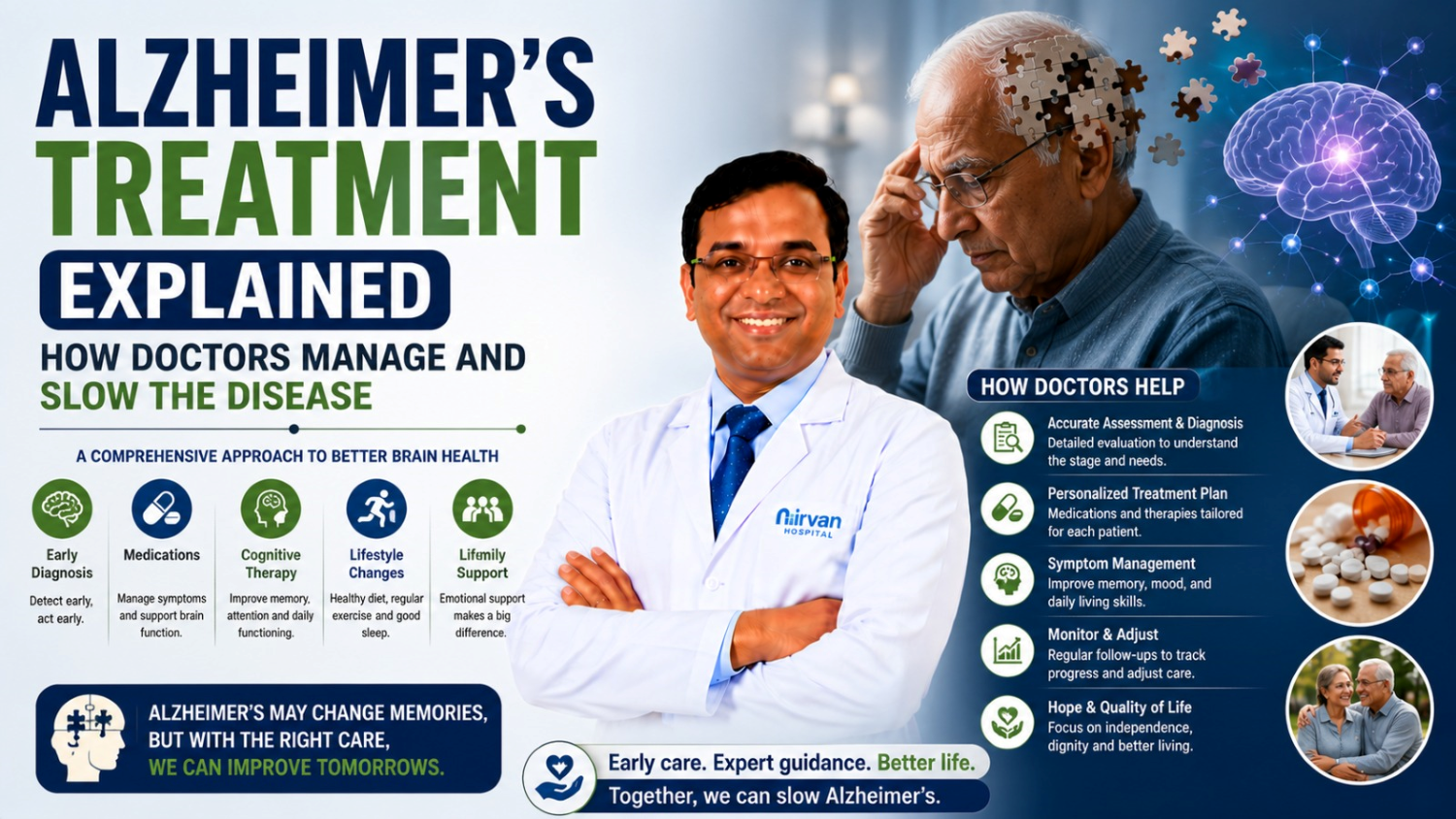
Alzheimer’s Treatment Explained: How Doctors Manage and Slow the Disease
Though it may seem daunting, an Alzheimer’s diagnosis offers hope. Alzheimer’s treatment has come a way. Even though we do not have a cure for Alzheimer’s yet Alzheimer’s treatment is getting better. The goal of Alzheimer’s therapy today is to slow down the progression of Alzheimer’s, improve thinking skills, manage the symptoms of Alzheimer’s that affect behavior and help people with Alzheimer’s stay independent for as long as they can.
The sooner people with Alzheimer’s start getting treatment for Alzheimer’s the better their chances are of keeping their skills and having a better life. This book talks about everything people need to know about treating Alzheimer’s from figuring out if someone has Alzheimer’s and what medicine they should take, to changing their lifestyle and getting the care they need for a time.
Alzheimer’s disease: What is
Alzheimer’s disease is a progressive neurological disease that, over time, impairs the brain cells controlling behaviour, language, memory and thought.
These brain alterations impair daily activities over time including:
- Thinking back to things that happened lately
- Understanding acquainted people
- Handling money
- After talks
- Deciding on actions
- Doing daily chores
With almost 60-80% of dementia cases attributed to Alzheimer’s, it is the most often cause of dementia.
Treatment for Alzheimer’s
Modern Alzheimer’s treatments mix medicine, therapy, lifestyle adjustments and help for caregivers.
Medication for Alzheimer’s
There are several drugs that can help brain cells communicate better.
- Among common drugs are:
- Cholinesterase inhibitors
- NMDA receptor blockers
- These medications could help:
- Enhance recall ability
- Improve concentration
- Cut uncertainty.
- Enhance daily performance.
For certain early stage patients, more recent disease-modifying therapies may be appropriate depending on availability and medical assessment.
Lifestyle Adjustments Good for Brain Health
- One’s ability to control Alzheimer’s disease depends much on good habits.
- Doctors usually advise:
- Balanced Diet
- A well-balanced diet high in:
- Fruits
- Vegetable
- entire grains
- Fish
- nuts
- Olive oil.
- For general brain health, Mediterranean-style diets are sometimes advised.
- Everyday Workouts
- Regular exercise aids:
- Circulation of blood
- Brain functionality
- State of mind
- Quality of sleep
If healthily advised, try for at least 150 minutes weekly of moderate exercise.
Good sleep promotes general cognitive function and memory consolidation.
Psychological Stimulus Things like:
- Reading
- Crossword puzzle
- Learning New Skills
- Musicality
- Board games
helps maintain the brain’s activity.
Cognitive Therapy
Doctors might advise cognitive stimulation regimens that motivate people to:
- Handle little issues.
- Remember recollections
- Engage in dialogue.
- Spend time every day working on activities.
These treatments help to raise engagement and self-assurance.
Handling behavioral symptoms
Common behavioral signs of Alzheimer’s development are
Doctors can assist control:
- Stress
- Clinical Depression
- Aggression
- If they exist, hallucinations
- Sleep problems
Treatment may consist in counseling, environmental adjustments, routines and occasional medicine as needed.
Meals That Help Brain Health
Although no one diet may treat Alzheimer’s, a balanced diet helps general brain function.
Think about adding:
- Greens
- Berries
- Walnut
- Almonds
- Salmon
- Olive oil
- Beans
- Complete grains
- Seeds
Restriction:
- Processed meals
- Too much sugar
- Trans fats
- Too much drinking
How Doctors Reduce Alzheimer’s Disease Progression
- Early diagnosis will help to start treatment before notable brain damage occurs.
- Drugs meant to help memory, cognition, and daily activity.
- regular evaluations to change therapy as symptoms develop.
- To preserve brain function, adjust your lifestyle, including what you eat, how you exercise and sleep.
- Reading, riddles, and memory games – all mental tasks – help the brain stay active.
- Management of other medical conditions such as high blood pressure, diabetes, and cholesterol also helps to protect cognitive function.
- sleep disorders, nervousness, depression, and mood swings are in need of behavioural assistance.
- Caregiver education enables families to give compassionate, safe and effective care.
Knowing How to Treat Alzheimer’s
Treatment for Alzheimer’s disease seeks not to eradicate the disease but rather to:
- Slow cognitive impairment
- Improve memory capacity
- Cut down on behavioral signs
- Keep independence.
- Raise the general level of living quality.
- Help family members and caregivers.
Based on the stage of the disease and the patient’s general health, doctors develop customized treatment plans.
Expert Alzheimer’s Care with Dr. Deeptanshu Hanu Agarwal
Managing Alzheimer’s disease calls for more than just taking drugs. It calls for regular observation, attentive analysis, psychological help, instruction for caregivers and unique treatment planning.
Consultant Psychiatrist and Medical Director at Nirvan Hospital, Dr. Deeptanshu Hanu Agarwal, adopts a patient-centered, evidence-based approach to identify and treat cognitive and behavioral problems. To enable patients to reach the best quality of life, his approach stresses thorough psychiatric assessment, tailored treatment plans, psychotherapy as needed, medication control and ongoing follow-up.
Timely consultation can assist in identifying suitable treatment choices and offer families the direction they need along the trip, whether a patient is exhibiting early memory issues or has already been diagnosed with Alzheimer’s disease.
How Doctors Identify Alzheimer’s Disease
The first stage towards successful Alzheimer’s treatment choices is correct diagnosis.
- Usually doctors execute
- Medical Background
- Knowing symptoms and family history
- Physical Assessment
- Searching for neurological disorders
- Cognitive Testing
- Evaluations of thought and memory
- Blood Exams
- To exclude thyroid problems or vitamin deficiencies.
- Image Analysis of the Brain
Doctors could suggest:
- MRI
- CT Scan
- PET Scan
These tests help identify changes in the brain and rule out other conditions.
Recent Developments in Alzheimer’s Treatment
Research on Alzheimer’s disease is moving very quickly.
Still evolving areas are:
- Targeting aberrant brain proteins disease- modifying treatments
- Better diagnostic indicators
- Blood-based assays for more rapid discovery
- Digital instruments for tracking cognitive impairment
- Individualized care methods
Specialist evaluation is therefore essential as not every novel therapy is appropriate for every patient.
Final Thoughts
Alzheimer’s disease is still an illness that gets worse over time. There have been some good developments in treatment. These developments have improved the quality of life for people with Alzheimer’s disease. They have also made it possible to manage the symptoms of Alzheimer’s disease successfully.
If you have Alzheimer’s disease there are things you can do to slow down the disease. Early detection of Alzheimer’s disease is very important. You should also take the Alzheimer’s medication. Making wise lifestyle changes can help. So can cognitive therapy. Getting a lot of support from caregivers. All these things can help slow down the course of Alzheimer’s disease.
You should go see a doctor if you or a loved one is having memory problems that do not go away. The doctor should be a medical expert. They can figure out what is going on if you are having memory problems or other signs of impairment. It is very important to get help. Early intervention gives you the chance to come up with a treatment plan that is just right for you or your loved one. This can help you stay independent for as long as possible.
Frequently Asked Questions
How should Alzheimer’s best be treated?
The optimal course of action is dependent on the stage of the disease and the patient’s overall health. Behavioral modifications, cognitive therapies, medication, and caregiver support are commonly combined.
Is there treatment for Alzheimer’s disease?
No sir. Therapy can alleviate symptoms and, in some cases, retard the progress of the disease, even though a cure has not been found and the prospect of a cure remains a dim one.
What are the first symptoms of Alzheimer’s? Alzheimer’s HDP says to look out for.
Early signs and symptoms may include confusion and poor judgement, memory loss, problems finding words, and difficulty performing simple, familiar tasks.
Do Alzheimer’s patients exercise benefit?
Yes. Mobility Exercise improves general well-being by increasing mobility, enhancing mood and improving cognitive function.
Can diet alleviate Alzheimer’s symptoms?
Though it doesn’t cure Alzheimer’s disease, a healthy diet helps to maintain general brain health and could go along with medical care.